Birkenstock Sizing: EU Size Conversion, Regular vs Narrow Widths, and How the Brand Says to Check the Fit
Birkenstock lists all its footwear in European sizes, and its US fit guide gives a simple conversion: add 31 to a women's US size or 33 to a men's US size to get the EU equivalent. Width matters just as much as length here, because Birkenstock says its shoes are meant to let toes spread outwards naturally. The brand marks width two ways — with an outlined footprint symbol for Regular and a filled one for Narrow — and prints that symbol on the footbed itself. This guide walks through the conversion formulas and charts, the two width systems with their women's and men's equivalents, the quarter-inch toe-space rule the brand gives for a correct fit, the break-in steps it recommends after purchase, and the checks Birkenstock's own FAQ suggests before deciding between Regular and Narrow. Everything here comes from Birkenstock's official fit and FAQ pages; as with any sizing guidance, treat it as the brand's own instructions and verify the fit on your own feet before keeping a pair.
Contents
Birkenstock footwear is listed in European sizes across the brand's ranges, and its US fit and size guide gives two simple formulas for converting from US sizes. For women, the brand says U.S. size plus 31 equals the EU size; for men, U.S. size plus 33 equals the EU size. The same page offers a printable foot measurement template as an alternative, and a conversion chart covering women, men and kids.
The chart translates US half-size ranges into Birkenstock's EU scale. A few reference points from the brand's published table:
- Women's US 4–4 1/2 maps to EU 35; US 7–7 1/2 maps to EU 38; US 10–10 1/2 maps to EU 41.
- Men's US 7–7 1/2 maps to EU 40; US 9–9 1/2 maps to EU 42; US 12–12 1/2 maps to EU 45.
- The kids' chart runs from US 6–6 1/2 at EU 24 up through US 3–3 1/2 at EU 34, after which the adult charts take over.
Width: the other half of the sizing decision
For Birkenstock, length is only part of the fit. The brand's fit guide splits its width system into two categories and tells shoppers to choose Regular for medium to wide feet or Narrow for narrow to medium, adding that its Narrow width fits most women's feet. Each width is also tied to conventional letter sizes: the brand lists Regular as women's C–D and men's D–EE, and Narrow as women's A–B and men's B–C.
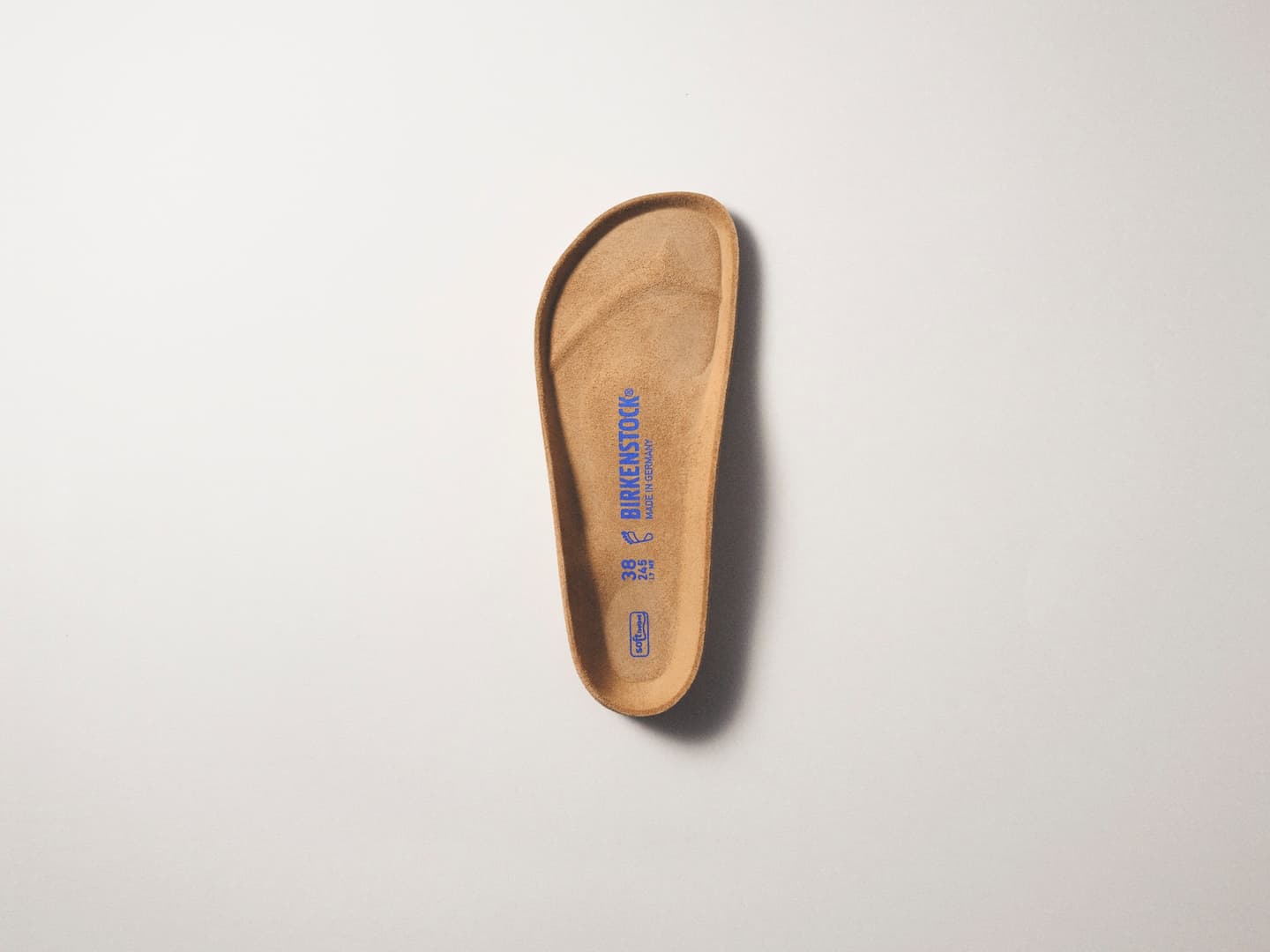
Birkenstock marks the width with a footprint symbol, shown online and on shoe boxes: an outlined footprint means Regular, a filled footprint means Narrow. The same symbol is printed on the footbed of the brand's shoes, so you can check a shoe you already own. In the brand's FAQ wording, the narrow width carries a solid footprint and the regular width an outline of a footprint.
Why the shoes may feel roomy at first
If a new pair seems large, the brand's FAQ frames this as deliberate rather than a sizing error: a new pair of Birkenstocks may seem large and roomy at first. According to Birkenstock, the design is not like a narrow fashion shoe but is meant to encourage your toes to spread outwards naturally, and once that is taken into account you should be able to gauge the correct width. The brand's advice is to assess width on your foot rather than by how the shoe feels against the expectation of a conventional dress shoe or sneaker/trainer.
The FAQ gives three practical checks for deciding between the widths:
- Adjust and tighten the straps on a sandal before concluding the fit is wrong.
- If the straps are still too loose on your foot, the brand says extra holes can be punched in the strap.
- If there is significant room on either side of your foot in the footbed, Birkenstock says you are most likely a Narrow.
As a separate note on a correct Narrow fitting, the brand says you should still have some space along the sides of your feet, and they should not ride up along the side rims of the footbed.
Testing the fit before you buy
The brand's fit guide sets out a short try-on sequence under its "test the fit" heading. Before stepping in, it says to flex the footbed by placing one hand under the toe and one under the heel, which the brand describes as beginning the break-in period. Then open all the straps, step in, and fasten them comfortably. The final check concerns toe clearance: your toes should not touch the edge of the footbed, and the brand says to aim for about a quarter inch of space around your foot.
Breaking them in, as the brand describes it
After purchase, Birkenstock's guide prescribes a gradual break-in rather than an immediate full day of wear. Keep the straps loose at first to avoid pressure points, wear the shoes around the house for one to two hours at a time, and gradually increase wear time as your feet adjust to the footbed. As the footbed begins to mold to your feet, the brand says to tighten the straps. This is Birkenstock's own recommendation for its footwear, not a universal rule.
How to verify the fit yourself
Everything above comes from Birkenstock's own US fit and size guide and its FAQ on choosing a width, so the brand's pages remain the reference if the guidance changes. To check the result on your own feet: measure against the brand's printable foot measurement template if you are between sizes, read the printed footprint on the footbed of any pair you own to confirm its width, and apply the quarter-inch toe-space check at try-on. If the sides of your feet ride up along the footbed rims, that is the brand's signal you need a different width, not a different length.
From the source
Written from the pages listed above and checked by the editors. Spotted a mistake? Write to us: corrections keep the address and the first publication date.
Read next
More in FitHow to Convert Your Shoe Size to Sock Size: Darn Tough's Charts in US, UK and EU Scales
Darn Tough publishes its own size charts that map sock sizes (XS to XXL) to Men's US, Women's US, Euro and UK shoe sizes, with heel-to-cuff height measurements in inches and definitions of no cushion, cushion and full cushion. Here is how the brand says to use them, and where its guidance stops.
Wide Shoe vs. Wide Toe Box: What KEEN Says the Difference Is, and Where the Brand's Fit Advice Stops
KEEN's own fit guide draws a line between a wide shoe and a shoe with a wide toe box — and it is careful, in the brand's words, not to be a medical authority. Here is the distinction as KEEN explains it, what the brand says roomy toe boxes do, and how the brand suggests checking toe room.
Blundstone Boot Sizing: AU/UK Stamped Sizes, US Conversion, and Fit Notes by Series
Blundstone stamps the AU/UK size on the bottom of each boot and asks US customers to order in US size using its conversion table. Here is what the brand's size guide says about fit, heel give, toe space, stretch, and series-by-series differences — and how to check the result on your own feet.