EU Shoe Size to UK and US Conversion: Charts and Foot-Length Measures, Following Foot Locker's Retailer Guide
How EU, UK and US shoe sizes relate, why no conversion is exact, and how to measure your feet at home — with the men's and women's charts Foot Locker UK publishes, attributed to the retailer.
Watch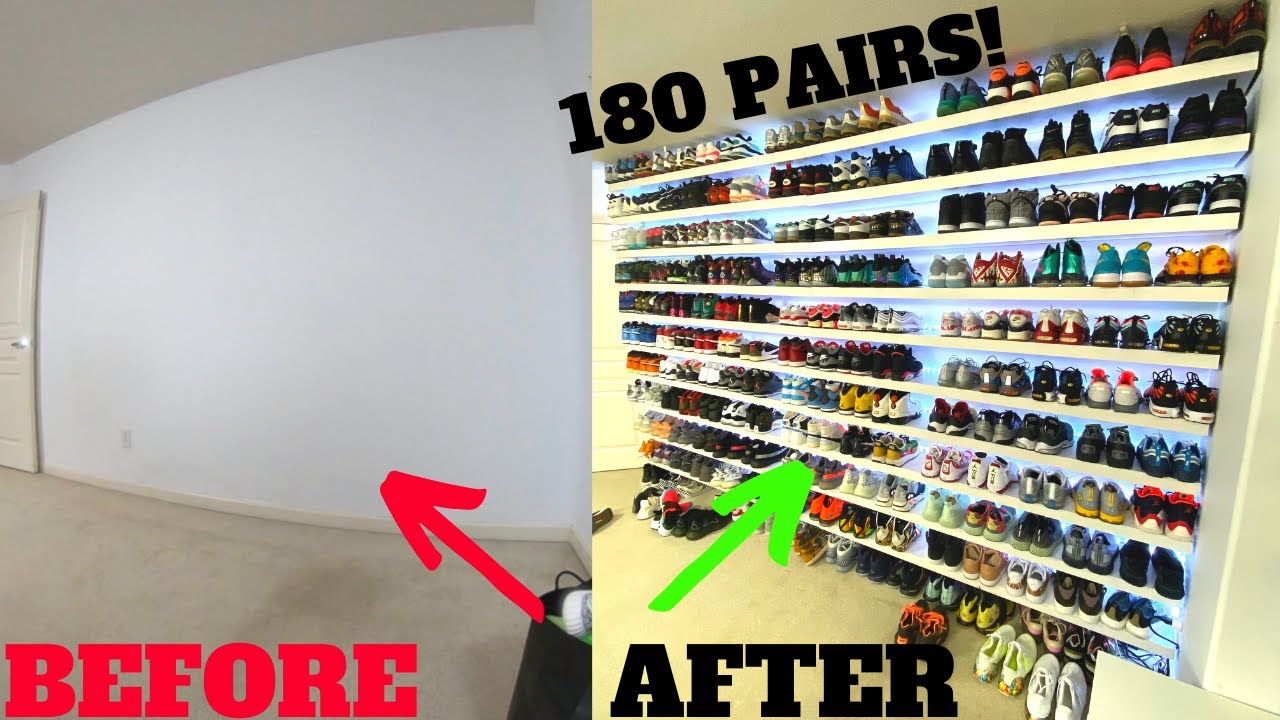 NEW SNEAKER DISPLAY WALL! (MOST IKEA LACK SHELVES EVER USED?)
The recording belongs to Hes Kicks, not to this publication, and it plays from YouTube: opening it lets YouTube see the request.Watch on YouTube instead.
Contents
Shoe shopping across borders means juggling three numbering systems. A trainer bought in a European shop will be labeled in EU sizes, a British brand will list UK sizes, and American sites use US sizes — and the same pair of sneakers/trainers can carry a different number in each. Foot Locker UK, a retailer, publishes a conversion guide that maps all three systems against foot length in centimeters and inches, and its advice is a useful starting point for reading any size chart. The numbers below come from that guide as captured on September 21, 2026; retailers revise their charts, so treat them as the retailer's snapshot rather than a permanent standard.
The reason there is no single perfect conversion is that the systems are built on different units. As Foot Locker UK explains, the UK system is based on an old English unit called the barleycorn (about 1/3 of an inch), while the EU system uses Paris points. Because the scales step in different increments, conversions are approximations, and sizes from different brands can vary.
Men's conversion chart
The retailer's men's chart runs from UK 5 to UK 15.5. A few anchor points from the chart's table: an EU 42 corresponds to a UK 8.5 and a US men's 9, with a foot length of 26 cm (10.25 inches); an EU 40 maps to UK 6.5 / US 7; and an EU 44 maps to UK 10.5 / US 11, for a foot of 27.9 cm (10.93 inches). Separately, Foot Locker UK's FAQ gives a different figure for EU 42 — a UK 8, a US men's 8.5 and a foot length of about 26.3 cm (10.4 inches) — calling that the average conversion, which is a good illustration of why it tells shoppers that variations exist between brands and to confirm with the brand's own size guide.
Women's conversion chart
The women's chart runs from UK 2 to UK 12. In the chart's table, an EU 42 maps to a UK 9.5 / US 11.5, for a foot length of 27.1 cm (10.7 inches). The retailer's FAQ answers give slightly different pairings: it says an EU 38 typically converts to a UK 5 for women — a size Foot Locker UK calls one of the most common for women, fitting a foot of 23.8 cm (9.37 inches) — and that an EU 40 corresponds to a UK 6.5 in women's shoes, a US men's 7 or a US women's 8, fitting a foot of approximately 25 cm (9.8 inches). For a quick US-to-UK shortcut, the retailer offers a rule of thumb: subtract one size from the US size for men's shoes, and two sizes for women's shoes — for example, a US men's 10 is a UK 9 — while noting that variations can occur between brands.
How to measure your feet at home
Foot length is the measurement that ties the three systems together, and Foot Locker UK describes a simple paper-and-pen method:

- Place a piece of paper on a hard floor against a wall
- Stand on the paper with your heel touching the wall
- Mark the tip of your longest toe with a pen held straight down
- Measure the distance from the edge of the paper to the mark
- Measure both feet and use the larger measurement
Once you have that length in centimeters, you can read it directly against the chart columns instead of relying on the size numbers alone.
Fitting tips from the retailer
Foot Locker UK pairs its charts with several fitting pointers. Feet can swell during the day, so the retailer recommends measuring them in the evening for a more precise size, and notes that it is common for one foot to be slightly larger, so you should buy for the larger foot. It also suggests sizing up when you are between sizes, especially for athletic shoes or boots. Brand-specific sizing matters because of the different 'lasts' — the mold that shapes the shoe — that manufacturers use, so the retailer advises checking the manufacturer's own size chart when possible. It adds that men's shoes are typically wider than women's shoes, which is relevant if you shop across gendered size ranges.
What the conversion does not tell you
A converted number is a starting point, not a guarantee of fit. The charts give foot length, but not width, instep height or toe-box shape, all of which vary by model and last. That is why Foot Locker UK directs readers to the manufacturer's own size guide, and the discrepancy the retailer itself shows between its chart and its FAQ for men's EU 42 shows how far the same source can disagree with itself. If you already own a pair that fits well, its labeled size in your usual brand is a useful reference point for ordering a similar style.
To check the result yourself, measure both feet in the evening using the paper method, keep the larger measurement, and compare it in centimeters against the size chart on the product page of the brand or retailer you are buying from rather than relying on a converted number alone. If the retailer publishes its own chart for that shoe, it takes precedence over any general table; and since retailers do update their guides, it is worth confirming the current figures on the live page before you order.
From the source
Written from the pages listed above and checked by the editors. Spotted a mistake? Write to us: corrections keep the address and the first publication date.
Read next
More in FitLevi's Shrink-to-Fit™ Jeans: How to Size and Care for Them, According to Levi's Own Guides
Shrink-to-Fit™ jeans are cut from unpreshrunk raw denim, so the size you buy is not the size you end up with. Levi's help-center pages give a sizing table that depends on whether you plan to machine wash, plus care steps for raw denim. Here is what the brand says, with measurements in inches and centimeters, and where its guidance stops.
Labels·Brand programUS··3 min
Darn Tough's Lifetime Warranty: What the Brand Says It Covers, How to Claim, and What Changed in May 2024
Darn Tough guarantees its socks for life. Here is how the brand describes its coverage, the six-step US claim process, how claims work outside the US, and the change it says it made on May 21, 2024.
How to Care for Leather Shoes and Boots: KEEN's Own Cleaning, Conditioning and Storage Steps (and Where They Stop)
KEEN's official care guide lays out a simple routine for leather footwear: clean with a soft brush, condition about twice a year, dry naturally away from heat, and store with shoe trees or newspaper. A companion page covers mixed leather-and-synthetic hiking boots, including insole and lace replacement. Here is the routine as the brand gives it, with a note on what the guidance does not address.