How to Convert Your Shoe Size to Sock Size: Darn Tough's Charts in US, UK and EU Scales
Darn Tough publishes its own size charts that map sock sizes (XS to XXL) to Men's US, Women's US, Euro and UK shoe sizes, with heel-to-cuff height measurements in inches and definitions of no cushion, cushion and full cushion. Here is how the brand says to use them, and where its guidance stops.
Watch Best Merino Wool Hiking Socks? | Smartwool vs Darn Tough
The recording belongs to Ridge & River, not to this publication, and it plays from YouTube: opening it lets YouTube see the request.Watch on YouTube instead.
Contents
Darn Tough spells out the link between shoe size and sock size on its size-chart page, converting its sock sizes — extra small through extra extra large — into Men's US, Women's US, Euro and UK shoe sizes, so readers on either side of the Atlantic can find their sock size without guessing. The brand's own rule of thumb is simple: "Generally, your shoe size is a good indicator of what sock size you will fit."
These are the brand's own charts, not a standard it presents as industry-wide, and the measurements are given in inches. If you work in centimeters, you will need to convert them yourself. This article walks through the men's/unisex, women's and kids' tables as Darn Tough publishes them, then covers sock height and cushion — two things the brand says matter alongside length of foot.
The men's/unisex and women's charts
The men's/unisex chart runs from XS to XXL. In Men's US shoe sizes, XS covers 2.5–5, S covers 5.5–7.5, M covers 8–9.5, L covers 10–12, XL covers 12.5–14.5 and XXL covers 15–17. In Euro sizes the same rows read 35–38, 38–40, 41–42, 43–45, 46–49 and 50–53; in UK sizes, 2.5–4.5, 5–7, 7.5–9, 9.5–11.5, 12–14 and 15–16. Women's US equivalents are listed for XS through L, with the rows for XL and XXL left blank for women.
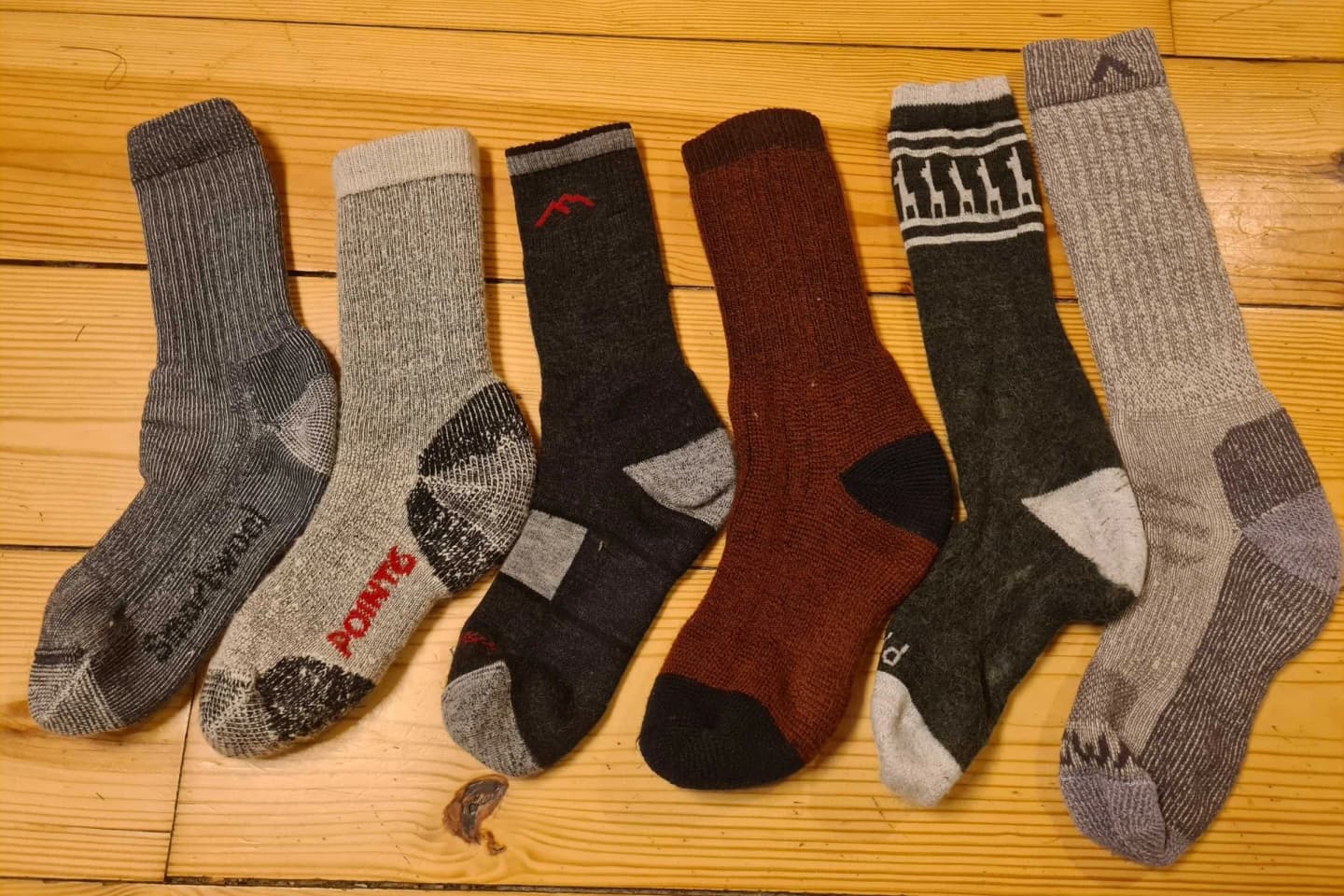
The women's chart starts at S and covers Women's US 4.5–7 (S), 7.5–9.5 (M) and 10–11.5 (L), with corresponding Men's US, Euro and UK columns. The brand also notes that "By popular demand, XL is here in select women's styles for a limited time", covering Women's US 12–14 — so extended women's sizing depends on the style. For the smallest feet, the brand's women's FAQ points to its kids' line: "If your feet are still too small, check out our kids socks – we don't judge."
The kids' chart has three sizes — S (Kids' US 9–11.5), M (12–2.5) and L (3–6) — with Euro and UK columns alongside.
The rules the brand gives for choosing a size
Darn Tough's sizing FAQ lays out a short procedure, which we can list as the brand states it:
- First, determine what shoe size you wear.
- Find the sock size your shoe size corresponds to in the brand's chart. Each Darn Tough sock size fits 2–3 shoe sizes.
- If you fall between two size categories, the brand says to size up.
- If you already own a pair and are unsure of its size, check inside the cuff, where the brand says it knits the size (for example, "M" for medium).
The brand gives a worked example: "if you wear a men’s size 11 shoe, you will want a men’s large sock since the men’s large fits shoe sizes 10-12."
Men's versus women's sizing
The brand publishes separate men's and women's charts, and says its men's and women's socks are cut differently. On the women's collection page, Darn Tough states: "Our women’s socks are cut slightly shorter and narrower than the men’s and are one size smaller (a women’s medium sock would be a men’s small)." The men's page mirrors this: "Our men's socks are a whole size larger than women's to accommodate a larger foot (so a men's medium fits like a women's large). On top of that, they're built slightly wider and taller." The practical upshot is that cross-shopping between the men's and women's ranges means shifting one sock size, according to the brand.
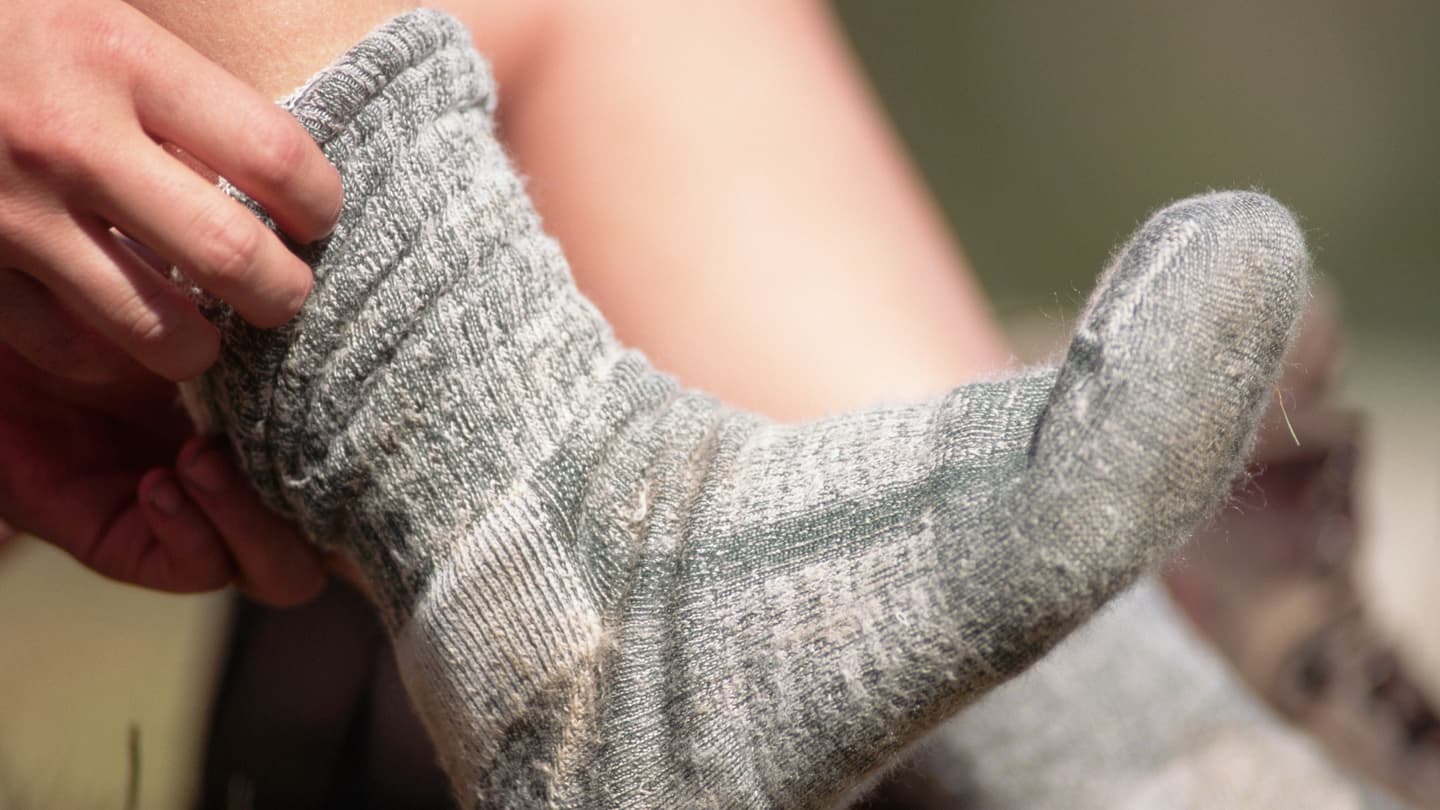
On range: the brand says its standard men's socks are knit for men's shoe sizes 8–14.5, with select styles in extended sizing from a shoe size 2.5 (XS socks) to 17 (XXL socks). Women's socks, per the brand, run from extra small to large for shoes sized 4.5 to 14, with the limited-run XL noted above.
Sock height, measured heel to cuff
Beyond foot length, the brand defines height by measuring "from the heel to the cuff of the sock", in inches. Its height chart gives, for men/unisex and women respectively: No Show (hidden) 2"/1.75", No Show tab 3.5"/2.75", Quarter 5.5"/5.5", Shorty 6"/5.75", Micro Crew 8.5"/7.5", Crew 10.5"/8.5", Boot 11"/10.5", Mid-Calf 12"/12" and Over-the-Calf 17"/16.25". Kids' heights are listed for Quarter (4"), Micro Crew (6"), Crew (7.5") and Over-the-Calf (13"). The brand cautions that "results may vary based on your individual leg length".
Cushion and weight terms
The chart page also defines the cushion levels the brand uses, which affect how a sock feels at a given size:
- No Cushion: a thin knit with no terry loops, described by the brand as thin regardless of yarn weight.
- Cushion: terry loops underfoot and in other areas, but not wrapping the whole foot — the brand calls this its most popular, versatile style.
- Full Cushion: terry loops running the entire length of the sock, or at least up to the cuff, wrapping the foot and leg.
The brand adds two exceptions worth knowing: some Ski & Snowboard socks feature targeted cushioning in the shin, and its Work category includes socks for steel-toe footwear with extended cushioning in the toe. Yarn weight is a separate axis, with ultra-lightweight and lightweight standard for the brand's running, skiing and casual categories, and midweight and higher for what it describes as outdoor socks.
To check the result yourself, find your shoe size in the scale you use — Men's US, Women's US, Euro or UK — in the brand's published chart, note the sock size it maps to, and size up if you sit between two rows. For height, hold a ruler or measuring tape against your leg starting at the heel bone and compare with the inch figures above, remembering the brand's caveat that leg length varies. If you own the socks already, the size is knitted inside the cuff.
From the source
Written from the pages listed above and checked by the editors. Spotted a mistake? Write to us: corrections keep the address and the first publication date.
Read next
More in FitWide Shoe vs. Wide Toe Box: What KEEN Says the Difference Is, and Where the Brand's Fit Advice Stops
KEEN's own fit guide draws a line between a wide shoe and a shoe with a wide toe box — and it is careful, in the brand's words, not to be a medical authority. Here is the distinction as KEEN explains it, what the brand says roomy toe boxes do, and how the brand suggests checking toe room.
Blundstone Boot Sizing: AU/UK Stamped Sizes, US Conversion, and Fit Notes by Series
Blundstone stamps the AU/UK size on the bottom of each boot and asks US customers to order in US size using its conversion table. Here is what the brand's size guide says about fit, heel give, toe space, stretch, and series-by-series differences — and how to check the result on your own feet.
How to Measure Yourself for Clothing Sizes: ASOS's Bust, Waist, Hip and Inside-Leg Steps, with UK, US and EU Conversions
ASOS publishes how-to-measure instructions and UK, US, EU and Australian conversion charts for its own-brand women's and men's clothing. A walkthrough of the bust, waist, hips and inside leg measurements as the retailer gives them, plus what to watch for with dual sizes, petite, tall and maternity charts — including conflicting low-hip figures on ASOS's own pages.