Wide Shoe vs. Wide Toe Box: What KEEN Says the Difference Is, and Where the Brand's Fit Advice Stops
KEEN's own fit guide draws a line between a wide shoe and a shoe with a wide toe box — and it is careful, in the brand's words, not to be a medical authority. Here is the distinction as KEEN explains it, what the brand says roomy toe boxes do, and how the brand suggests checking toe room.
Watch KEEN Ridge Flex Hiking Boots with KEEN.BELLOWS FLEX Technology - Hike Happy!
The recording belongs to Chase the Summit, not to this publication, and it plays from YouTube: opening it lets YouTube see the request.Watch on YouTube instead.
Contents
If you have ever ordered a "wide" sneaker/trainer and still felt your little toe pressed against the side, you already know that width is not one thing. KEEN published a fit explainer on its blog on October 18, 2022 that tries to untangle this, and it opens with a distinction worth knowing before you buy: a wide shoe and a wide toe box are not, in the brand's words, the same fit.
This matters because the two options address different fit problems. Picking the wrong one — buying extra width when what you needed was forefoot room, or the reverse — can leave you with a shoe that fits worse than the one you replaced. Below is the difference as KEEN states it, the brand's reasoning for why toe room matters at all, and a note on where the brand's own advice stops.
The Difference, in KEEN's Words
KEEN defines the two fits in a single passage of its blog post:
- Wide shoes have extra space all throughout the shoe, to accommodate wide feet.
- Wide toe boxes have extra space at the widest part of the foot — the forefoot.
In other words, a wide shoe adds volume throughout the shoe, while a wide toe box puts the extra room specifically at the forefoot — which, by implication, is where the room is concentrated rather than spread across the whole shoe. Someone whose heel slips in a wide shoe but whose toes are pinched may therefore be looking for the second thing, not the first — though how any given foot maps onto either option is a fit question the blog post does not attempt to answer for individuals.
Why the Brand Says Toe Room Matters
KEEN frames its forefoot-friendly fits around "toe splay" — what the brand describes as the natural spreading of the toes when you walk barefoot. In the brand's telling, toes that are squeezed into pointed, narrow toe boxes are pushed out of alignment, and the brand links alignment to balance and posture. Its suggested self-test is simple and costs nothing:
- Stand barefoot on one foot with your toes lifted off the ground, and note how it feels to balance.
- Then stand on the same foot with all of your toes resting flat on the ground, and compare.
Worth flagging: the brand itself draws a boundary here. The post opens by saying KEEN is "not foot doctors, but we are self-proclaimed foot nerds." So the claims about bunions, hammertoes, plantar fasciitis, and spinal alignment are the brand's framing of why roomy toe boxes matter, not a medical judgment — if you have a diagnosed foot condition, that is a conversation for a podiatrist or other foot specialist, not a shoe blog.
Where the Original Fit Comes In
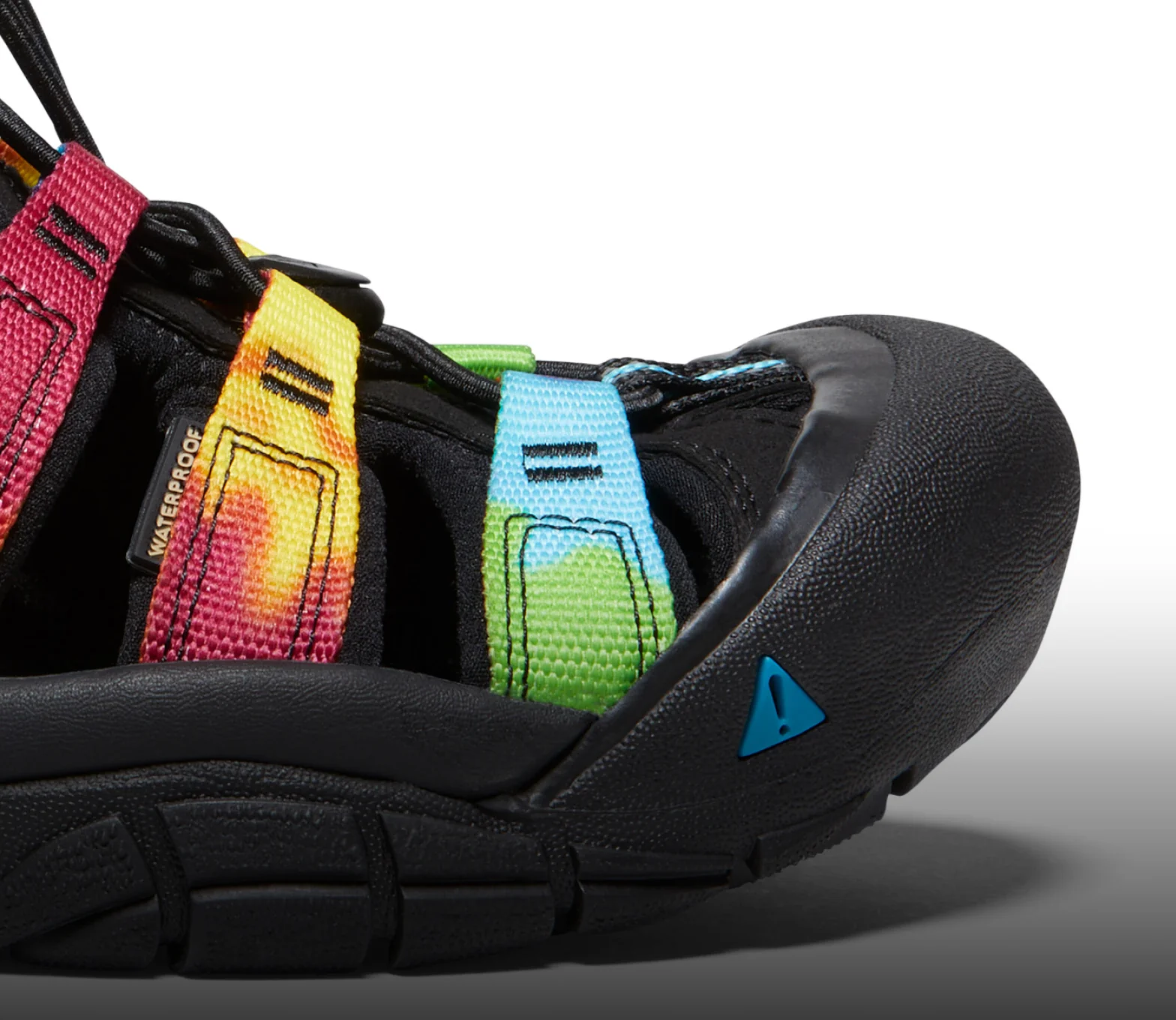
The distinction is not academic for KEEN — it is the design logic behind the brand's own fits. The blog post names its Original Fit, which the brand says appears on styles such as the Targhee boot and the Newport sandal, as built with extra forefoot space so toes can splay while walking. That is a brand statement about the brand's own shoes: it describes what KEEN says its fit does, and the proof is in how a particular style fits your foot, not in the marketing copy.
Checking Toe Room, Following the Brand's Framing
You do not need to take KEEN's word for any of this — the distinction the brand draws is one you can test on your own feet. The checks below follow the brand's own framing of what roomy toe boxes are for:
- With the shoe on and laced or strapped, check whether your toes have room to spread and wiggle inside the toe box — the brand's post is titled around toes needing "wiggle room," and its advice is that toes "need room to spread out and wiggle around."
- To see your own toes splay, the brand suggests lifting and pressing your bare foot back onto the ground, then comparing that with how your toes sit inside a given shoe.
- Check heel and toe separately: a wide shoe, per the brand's definition, adds space throughout, while a wide toe box concentrates it at the forefoot — so a shoe that is loose at the heel but pinched at the toes is, in the brand's terms, the wrong kind of room.
- None of these checks replaces professional fitting for problem feet, and the balance exercise is KEEN's own suggestion, not a diagnosis.
Together, these checks let you verify the one claim in this article that actually matters to your purchase: whether the extra room in a given shoe is where your foot needs it. The post itself closes with the same instruction — set your toes free and let them splay — and how that plays out on your feet is something only you can judge.
From the source
Written from the pages listed above and checked by the editors. Spotted a mistake? Write to us: corrections keep the address and the first publication date.
Read next
More in FitBlundstone Boot Sizing: AU/UK Stamped Sizes, US Conversion, and Fit Notes by Series
Blundstone stamps the AU/UK size on the bottom of each boot and asks US customers to order in US size using its conversion table. Here is what the brand's size guide says about fit, heel give, toe space, stretch, and series-by-series differences — and how to check the result on your own feet.
How to Measure Yourself for Clothing Sizes: ASOS's Bust, Waist, Hip and Inside-Leg Steps, with UK, US and EU Conversions
ASOS publishes how-to-measure instructions and UK, US, EU and Australian conversion charts for its own-brand women's and men's clothing. A walkthrough of the bust, waist, hips and inside leg measurements as the retailer gives them, plus what to watch for with dual sizes, petite, tall and maternity charts — including conflicting low-hip figures on ASOS's own pages.
EU Shoe Size to UK and US Conversion: Charts and Foot-Length Measures, Following Foot Locker's Retailer Guide
How EU, UK and US shoe sizes relate, why no conversion is exact, and how to measure your feet at home — with the men's and women's charts Foot Locker UK publishes, attributed to the retailer.