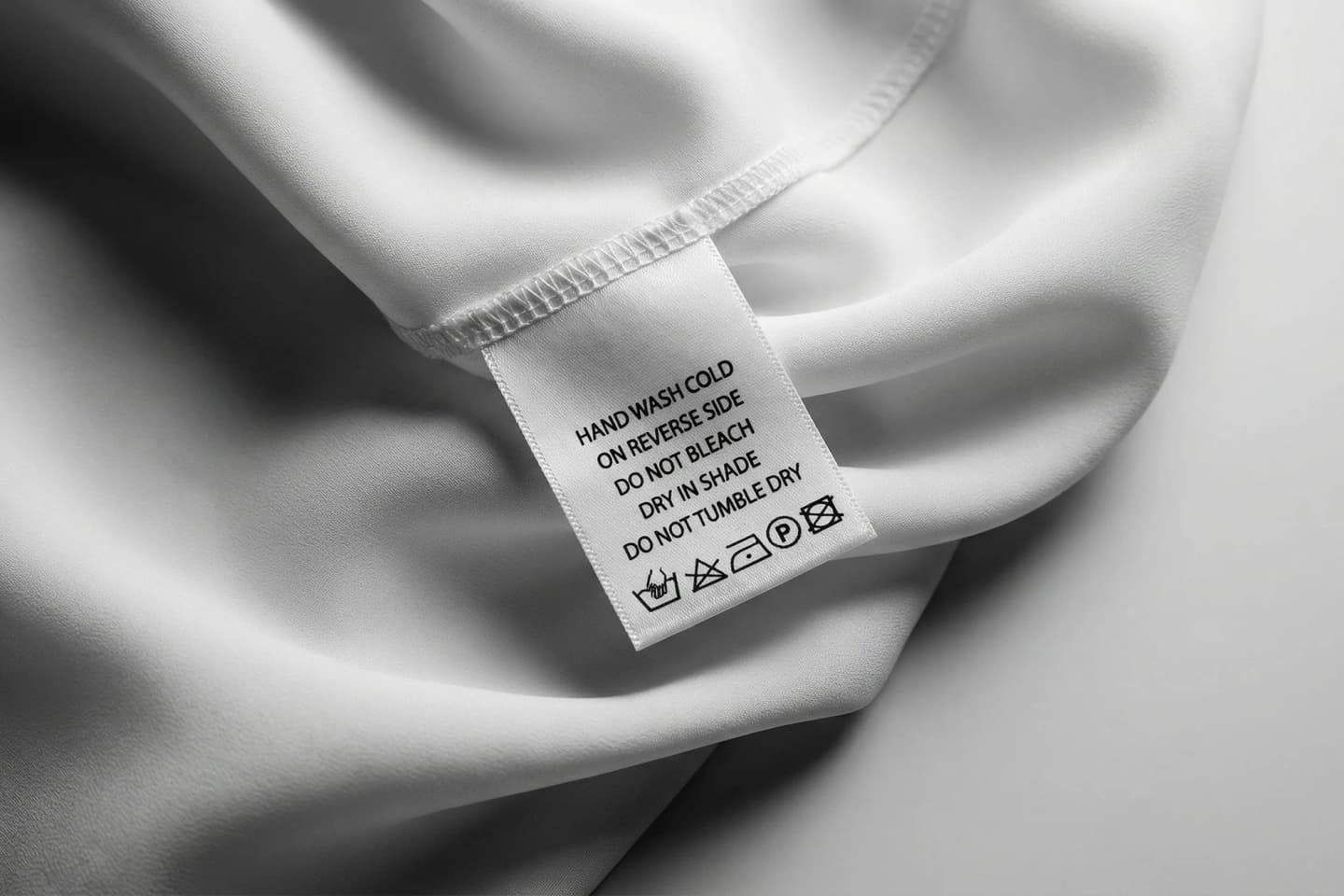
Labels, Claims & Rights·What the rule saysEU
What the Rule Says: The EU Green Claims Directive — the Proposed Rules on Substantiating Environmental Claims, and Why They Are Not Law Yet
In March 2023 the European Commission proposed a Directive on substantiating and communication of explicit environmental claims (the Green Claims Directive). On the Commission's page as reviewed for this article, its status is still listed as “Pending”, meaning it is a proposal, not rules in force. This explainer covers what the proposal would require — science-based substantiation, independent verification and governance of labeling schemes — how it fits with the EU's textiles strategy, and what shoppers can rely on today.
Contents
If you have ever picked up a sweater (jumper) or a pair of sneakers (trainers) labeled “made with recycled materials” or “climate neutral”, you have encountered what EU policymakers call a green claim. In March 2023, the European Commission adopted a proposal for a Directive on the substantiation and communication of explicit environmental claims — commonly called the Green Claims Directive. As of the Commission's green claims page when it was reviewed for this article, the proposal's status is “Pending”. That word matters: the Green Claims Directive is not law in force, and nothing in this article describes obligations that companies already must meet under it.
The Commission's publication page dates the proposal to 22 March 2023 and names the Directorate-General for Environment as its author. The proposal complements a parallel measure, the proposal for a Directive on empowering consumers in the green transition, which was adopted in proposal form earlier, in March 2022. Both are part of a set of EU initiatives aiming, in the Commission's words, to make “sustainable goods, services and business models the norm”.
What the proposal would require
As the Commission describes it on its green claims page, the proposal includes three key measures. Companies would have to follow “Clear criteria on how companies should prove their environmental claims and labels”. Claims and labels would be “checked by an independent and accredited verifier” before being used. And new governance rules would apply to environmental labeling schemes, to “ensure they are solid, transparent and reliable”. In short, the proposal would shift the burden from a shopper having to take a claim at face value to businesses substantiating the claim up front, with an external check before the claim goes on the product or website.
Which claims would be covered
The proposal targets explicit environmental claims made voluntarily by businesses to consumers about the environmental impacts, aspects or performance of a product or the trader itself — and notably only claims “not currently covered by other EU rules”. The Commission gives examples on its page, including “Packaging made of 30% recycled plastic”, “Company's environmental footprint reduced by 20% since 2015” and “CO2 emissions linked to this product halved as compared to 2020”. Claims of these kinds — recycled-content percentages and carbon reductions — appear in clothing marketing as well; a claim stated this specifically and voluntarily, outside the scope of other EU rules, is the kind of statement the proposed Directive would govern.
Why the Commission proposed this
The figures the Commission cites on the page explain the motivation. According to the Commission, “53% of green claims give vague, misleading or unfounded information”, “40% of claims have no supporting evidence”, and “Half of all green labels offer weak or non-existent verification”. The Commission also counts “230 sustainability labels and 100 green energy labels in the EU, with vastly different levels of transparency”. These are the Commission's own statistics as stated on its page, not independent findings, but they show the problem the proposal aims to fix: shoppers “struggle to make sense of the many labels”, and the Commission says consumer trust in environmental claims is “extremely low”.
Where clothing fits in the wider EU policy picture
The green claims proposal sits inside the EU's Strategy for Sustainable and Circular Textiles, adopted in March 2022. The strategy's implementation page lists, among its actions, ecodesign requirements to make textiles last longer and be easier to repair and recycle, a Digital Product Passport, mandatory and harmonized Extended Producer Responsibility rules for textiles, and restrictions on textile waste exports. The page names both the “Empowering Consumers in the Green Transition Directive and Green Claims Directive, proposed in 2022 and 2023” as measures that “aim to tackle greenwashing” in this sector. So for EU shoppers, the Green Claims Directive is one strand of a broader push — separate rules, with separate timelines, each at its own stage of the legislative process.
What the status means for shoppers today
Because the status on the Commission's page is “Pending”, the proposal's requirements — substantiation criteria, accredited verification, scheme governance — do not apply yet, and no date for entry into force is given on the pages reviewed here. Legislative proposals can be amended, delayed or withdrawn as they move through the European Parliament and the Council, so any statement about what the Directive will require should be checked against the current status before relying on it. Meanwhile, other EU textiles rules are already in force or at later stages: the strategy's timeline shows the ban on destroying unsold textiles and footwear beginning for large enterprises on 19 July 2026 and for medium-sized enterprises on 19 July 2030, and the textiles page reports that under the ban, in application since July 2026, businesses must prioritize keeping products in use by selling them or preparing them for reuse.
How to check for yourself
To verify where things stand:
- Open the Commission's green claims page (environment.ec.europa.eu) and read the “Status” line on the legislative proposal — it said “Pending” when reviewed for this article, and that is the field to re-check.
- On the publication page for the proposal, confirm the publication date shown (22 March 2023) and open the proposal document itself to read the operative articles.
- Check the European Parliament's legislative observatory and the Commission's press room for the current stage of the file, since a pending proposal may have changed since these pages were captured.
- Remember the scope detail: the proposed rules cover explicit claims, made voluntarily, not covered by other EU rules — so check which regime a specific claim falls under before assuming the Green Claims Directive governs it.
Until the legislative process concludes, treat green claims on clothing as statements to question rather than verified facts — the EU's own numbers, as cited above, explain why that caution is reasonable.
From the source
Written from the pages listed above and checked by the editors. Spotted a mistake? Write to us: corrections keep the address and the first publication date.
Read next
More in LabelsLabels·What the rule saysUS··4 min
What the US Care Labeling Rule (16 CFR Part 423) Requires on Clothing Labels — and What It Doesn't
An explainer of the FTC's Care Labeling Rule: what a care label must say on garments sold in the US, when symbols or exemptions apply, and where the rule's requirements stop.
Labels·What the rule saysEUUK··5 min
What UK Law Says About Textile Labels: The 2012 Regulations and Retained Regulation (EU) No 1007/2011
In the UK, textile labelling rests on two instruments that work together: Regulation (EU) No 1007/2011 sets out the labelling rules themselves, and the Textile Products (Labelling and Fibre Composition) Regulations 2012 (S.I. 2012/1102) supply the UK enforcement and offence provisions. This explainer sets out what each instrument covers, where labelling is not mandatory, and how to check what a label must contain.
Labels·Brand programUS··3 min
Darn Tough's Lifetime Warranty: What the Brand Says It Covers, How to Claim, and What Changed in May 2024
Darn Tough guarantees its socks for life. Here is how the brand describes its coverage, the six-step US claim process, how claims work outside the US, and the change it says it made on May 21, 2024.