Labels, Claims & Rights·What the rule saysUS
What the US Care Labeling Rule (16 CFR Part 423) Requires on Clothing Labels — and What It Doesn't
An explainer of the FTC's Care Labeling Rule: what a care label must say on garments sold in the US, when symbols or exemptions apply, and where the rule's requirements stop.
Contents
If you shop for clothing sold in the US market, the sewn-in care tag on a sweater or jumper is the work of the US Care Labeling Rule. The Federal Trade Commission (FTC) enforces the rule, which requires manufacturers and importers to attach care instructions to garments. Its official text is 16 CFR Part 423, titled Care Labeling of Textile Wearing Apparel and Certain Piece Goods, As Amended Effective September 1, 2000.
The rule applies to textile wearing apparel — a definition that excludes footwear, gloves, and hats — and to certain piece goods, meaning fabric sold by the bolt or roll for home sewing of apparel. This article covers what the rule requires on labels, how warnings and the reasonable-basis requirement work, and where its obligations stop.
What the label must say
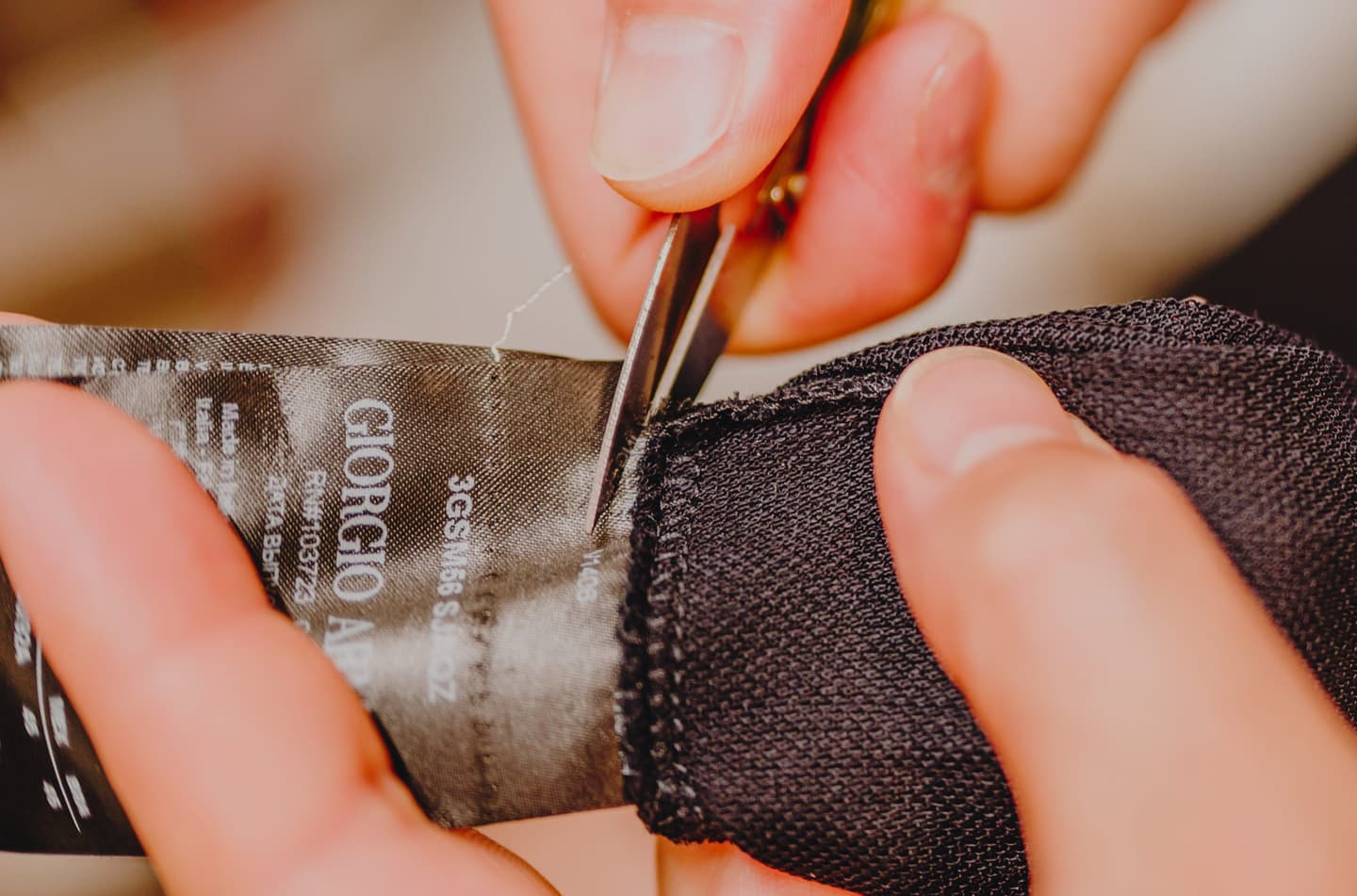
The rule defines a care label as a permanent label or tag containing regular care information that is attached so it will not become separated from the product and remains legible during the useful life of the product. Labels must be visible or easy to find at the point of sale; if packaging or folding hides them, the care information must also appear on the outside of the package or on a hang tag. Labels must be attached permanently and securely.
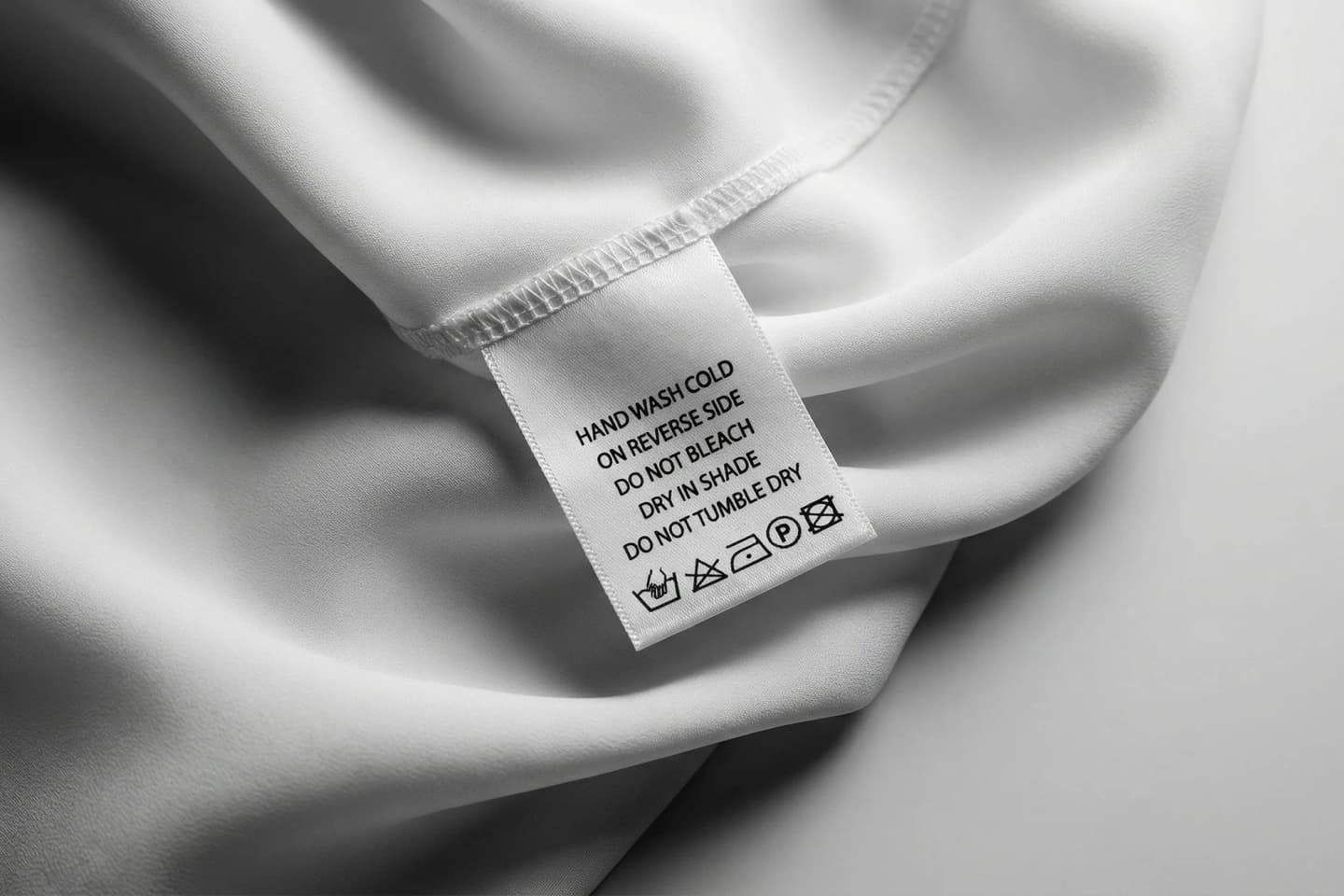
In general, a label for apparel must carry either a washing instruction or a drycleaning instruction. If either method can be used, one instruction is enough, though the FTC's business guidance notes that manufacturers may give instructions for both methods if they have a reasonable basis for each. A minimum washing instruction must state whether the garment should be washed by hand or machine, and must state a water temperature.
Warnings and what silence means
The rule requires warnings, not just instructions. A manufacturer or importer may not fail to warn a purchaser, prior to sale, when the product cannot be cleaned without being harmed, or when a care procedure a consumer or professional cleaner could reasonably use would harm the product or others being cleaned with it. The FTC's guidance gives an example: if pants are labeled for washing, consumers may assume they can iron them; if ironing would harm them, the label should read "Do not iron." If a garment cannot be safely washed or drycleaned, the label must say so — for example, "Do not wash -- do not dryclean."
Care instructions must also account for every part of the garment. According to the FTC's guidance, instructions must include all components, including non-detachable linings, trim, buttons, and zippers, with special considerations given as warnings such as "Remove trim" or "Close zipper." "Dryclean only" may be used when the garment can be drycleaned safely by the normal process using any drycleaning solvent.
The reasonable-basis requirement
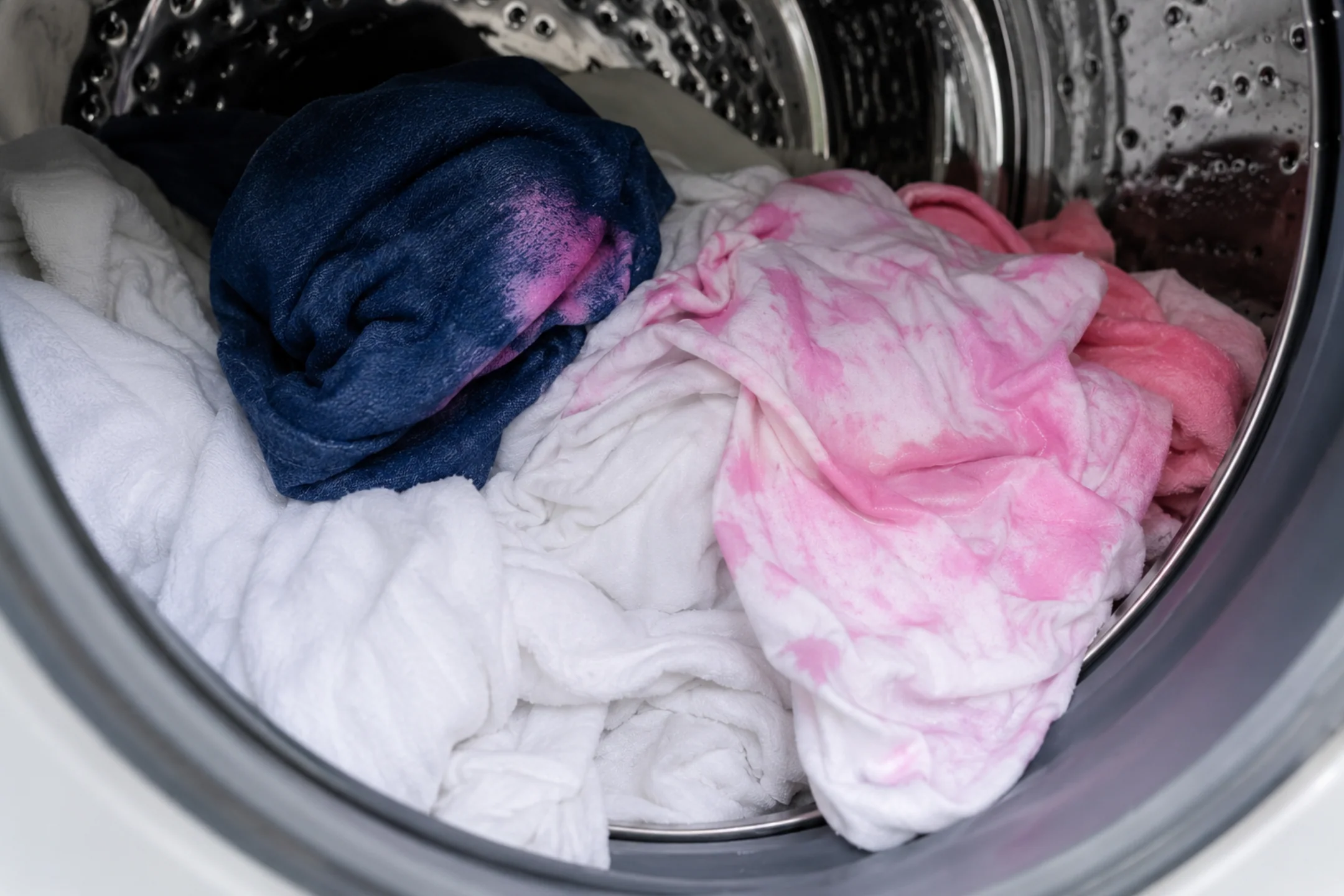
Behind every instruction there must be evidence. A manufacturer or importer must establish a reasonable basis for care information by possessing, prior to sale, reliable evidence that the product was not harmed when cleaned reasonably often according to the label instructions. The FTC's business guidance puts it plainly: you cannot say "Dryclean Only" unless you have proof that washing will harm the garment. When a garment has several components, the evidence must show that the entire garment will not be damaged when cleaned as directed — testing components alone is not enough if colors bleed between parts in a real wash.
Symbols and exemptions
Care instructions can appear in words, or as symbols under the system from the American Society for Testing and Materials designated as ASTM Standard D5489-96c, Standard Guide for Care Symbols for Care Instructions on Textile Products. The rule allows this symbol system in lieu of terms so long as the symbols fulfill the rule's requirements. The FTC notes these symbols are similar, but not identical, to the international ISO symbols used in many European countries.
Several items are exempt from the permanent-label requirement, though the care information still must reach the buyer. Totally reversible garments without pockets are exempt. Hosiery products — including stockings, anklets, waist-high tights, panty hose, and leg warmers — don't need a permanent care label, but must have care instructions on a hang tag, on the package, or in another conspicuous place. Products sold to institutional buyers for commercial use are also exempt.
What the rule does not cover
Footwear, gloves, and hats fall outside the rule's apparel coverage, since the definition of textile wearing apparel excludes those items. A "professionally wetclean" instruction also does not satisfy the current rule: the FTC says such a label does not comply, and notes that in September 2012 the Commission proposed amending the Rule to allow a wetcleaning instruction for items that can be professionally wetcleaned. As of the FTC's guidance as read for this article, those proposals had not become final: in March 2014 the Commission held a public roundtable discussion on the September 2012 proposals.
If you buy clothing or fabric on the US market, you can check a label against some of the rule's basic requirements yourself. Look for a permanently attached, legible label with a washing or drycleaning instruction; a washing instruction should name the method (hand or machine) and a water temperature; if a garment cannot be safely cleaned, the label should say so. For fabric sold by the bolt or roll, the care information should appear on the end of the bolt.
From the source
Written from the pages listed above and checked by the editors. Spotted a mistake? Write to us: corrections keep the address and the first publication date.
Read next
More in LabelsLabels·What the rule saysEUUK··5 min
What UK Law Says About Textile Labels: The 2012 Regulations and Retained Regulation (EU) No 1007/2011
In the UK, textile labelling rests on two instruments that work together: Regulation (EU) No 1007/2011 sets out the labelling rules themselves, and the Textile Products (Labelling and Fibre Composition) Regulations 2012 (S.I. 2012/1102) supply the UK enforcement and offence provisions. This explainer sets out what each instrument covers, where labelling is not mandatory, and how to check what a label must contain.
Labels·Brand programUS··3 min
Darn Tough's Lifetime Warranty: What the Brand Says It Covers, How to Claim, and What Changed in May 2024
Darn Tough guarantees its socks for life. Here is how the brand describes its coverage, the six-step US claim process, how claims work outside the US, and the change it says it made on May 21, 2024.
Labels·Brand program··4 min
Levi's 2-Year Warranty: Who Qualifies, What Counts as a Defect, and How to Claim — According to Levi's Own Policy
A brand program profile of the Levi's warranty as the company describes it in its own help center: what is covered, what counts as wear and tear, the photo requirements, and the voucher mechanics and limits. All statements are attributed to Levi's, per the help-center page as updated November 26, 2025.