Cemented, Fused and Goodyear-Welted Boots: What the Construction Terms Mean, According to KEEN Utility
KEEN Utility uses three construction methods across its work footwear: cement, a proprietary heat-and-pressure method it calls KEEN.FUSION, and Goodyear welt. Here is what the brand says each method is, the tradeoffs it describes between flexibility and durability, and how you can check a boot's construction yourself.
Watch HOW ARE SHOES STITCHED TOGETHER? | How The Leather Sole Stitcher Works! GOODYEAR WELTED
The recording belongs to Tring Shoe Repairs, not to this publication, and it plays from YouTube: opening it lets YouTube see the request.Watch on YouTube instead.
Contents
When you shop for work boots (or sturdy everyday boots), product pages and labels may mention how the sole is attached: cemented, fused, or Goodyear welted. These terms describe the physical method that joins the upper — the part covering your foot — to the midsole and outsole, and they matter because, as KEEN puts it, how boots are built plays a role in how they function and feel. This explainer summarizes what KEEN Utility, the work-footwear arm of KEEN, says about the three methods it uses across its line, based on the brand's own construction guides published on its website.
A note on sourcing: everything below comes from KEEN's own blog and FAQ pages, so durability, flexibility and water-resistance statements are the brand's characterizations of its own products and of these methods generally, not independent measurements. The definitions of cement and Goodyear welt construction, however, are widely used industry terms; KEEN.FUSION is a proprietary, brand-named process.
Cement construction: glued, light, flexible
Cement construction, in KEEN's description, means gluing the outsole directly to the midsole and upper with a strong cement, with no stitching. The brand calls it the most widely used type of shoe construction and says it is the lightest-weight method and creates the most flexible footwear — which is why, per KEEN, it appears in running shoes, hiking boots, casual shoes and lighter-duty work boots. In a separate durability guide, KEEN notes the method has been popular since about World War II and is used for most, if not all, athletic shoes. KEEN says it uses cement construction in several of its work shoe families, naming Arvada, Vista Energy and Reno.
KEEN.FUSION: a proprietary heat-and-pressure bond
KEEN.FUSION is not a general industry term but KEEN's own name for a process the brand describes as using heat and pressure to fuse the outsole, midsole and upper together, eliminating the need for glues and solvents. KEEN positions it between the other two methods on the flexibility-versus-ruggedness spectrum: it says the bond is more durable than cement but more flexible than a welt, suited to boots worn on more varied terrain. According to the brand, KEEN.FUSION appears on the Fort Wayne boot and on its American Built family, including the Dover, Independence and Coburg styles.
Goodyear welt: stitched, traditional, resoleable
Goodyear welt is the traditional method of the three. In KEEN's description, it stitches the upper, the insole, a welt — an extra piece of leather, rubber or plastic — and the outsole together. The strip is first glued and stitched around the perimeter of the upper, then the midsole and outsole are added, and a second line of stitching attaches the sole to the welt. The naming, per KEEN, goes back to the 1800s, and its own guides date it differently: one attributes the name to a stitching machine patented in 1875 by Charles Goodyear Jr., son of the developer of vulcanized rubber, while the durability guide says the Goodyear welt was originally developed in 1869 by Charles Goodyear. Before the machine, welted footwear was stitched entirely by hand, according to KEEN.
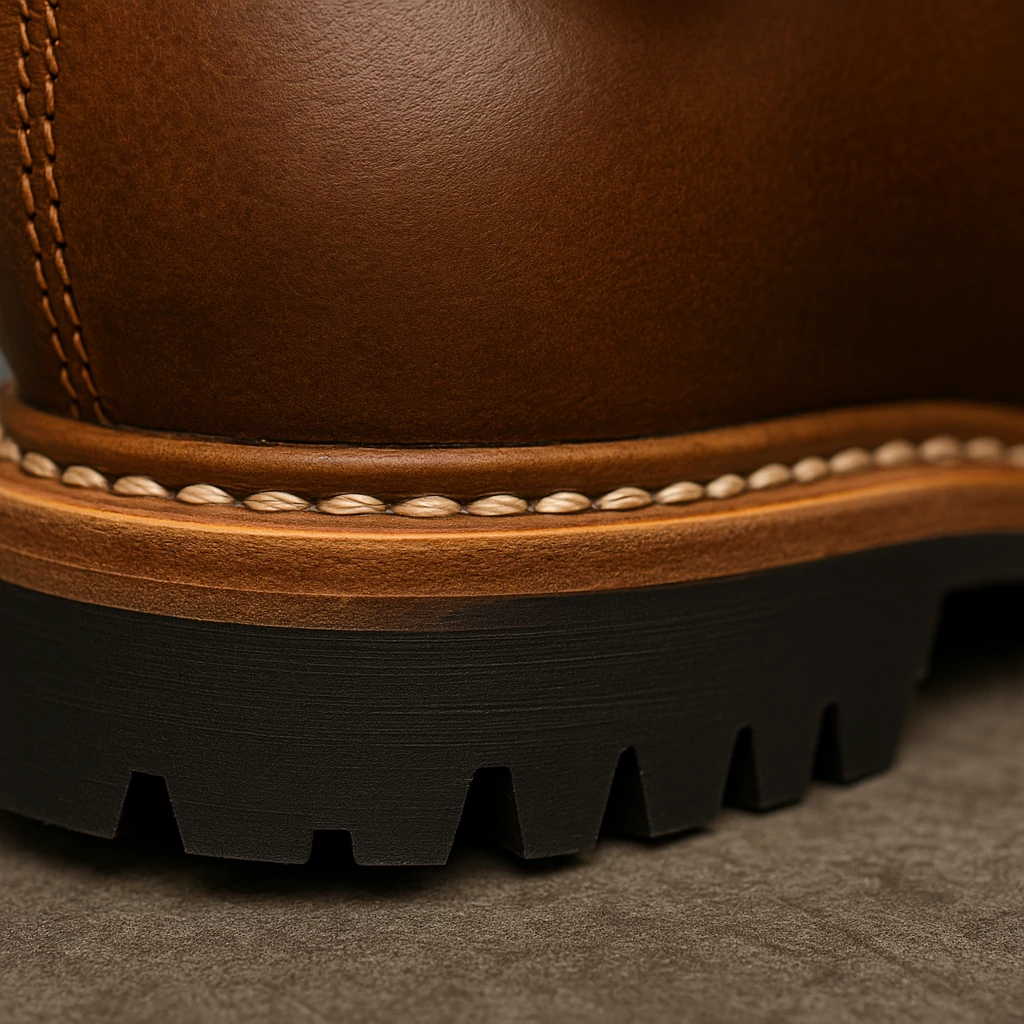
The benefits KEEN lists for welted boots are durability (the boot is held together by both adhesive and stitching), stability, high water resistance — because, the brand says, there are no seams on the inside of the boot for water to seep through — and longevity: KEEN states that a welted boot can be resoled, and that local cobblers can replace the sole multiple times, adding years or even decades to the boot's life. KEEN says it uses Goodyear welt construction on its heavy-duty styles, naming the Camden and Cincinnati boots. The tradeoff, on KEEN's own spectrum, is flexibility: welted construction sits at the rugged end rather than the flexible end.
Which method for which job, per KEEN
KEEN frames the three methods as a spectrum of flexibility versus ruggedness, and its own guidance maps them to work settings:
- Cement construction: lightweight, sneaker-like feel; KEEN points to its Arvada, Vista Energy and Reno lines for indoor manufacturing and warehouse work.
- KEEN.FUSION: a balance of flexibility and durability for indoor or outdoor work on uneven terrain; KEEN points to the Fort Wayne and its American Built boots.
- Goodyear welt: heavy-duty durability and resoleability; KEEN points to the Camden and Cincinnati boots.
- Note that these pairings are KEEN's recommendations for its own products, not an independent rule about which construction suits which trade.
One more claim worth labeling: in its durability guide, KEEN says all of its Utility products must reach a minimum of 50,000 flex cycles in its lab testing, and that its American Built Liberty boot reportedly reached one million flex cycles without cracking or delaminating. These are the brand's own lab figures and anecdotes, not third-party measurements, and lab flex testing, as KEEN itself notes, is not the same as a dynamic jobsite.
You can verify the construction of a boot yourself before buying. Per KEEN's own guide, a tell-tale sign of welt construction is stitching visible on both the top and the bottom of the boot, where a cemented shoe has a clean, streamlined look with no stitching. Check the product page or label for the stated construction method, and for KEEN.FUSION remember it is a brand-specific term — other makers may use different names for similar heat-fused or direct-attach methods, so read each brand's definition rather than assuming the terms match.
From the source
Written from the pages listed above and checked by the editors. Spotted a mistake? Write to us: corrections keep the address and the first publication date.
Read next
More in ShoesHow to Replace a Birkenstock Footbed: Which Models Take One, and the Brand's Own Steps
Birkenstock sells replacement footbeds for selected slippers and professional clogs, and the brand's own page walks through a four-step swap. Here are the models it names, the steps as the company gives them, the shearling sizing caveat, and current UK prices (captured 12 September 2026) — plus where the official advice stops.
Red Wing's Care Routines for Oil-Tanned and Roughout Boots on Two Captured Product Pages, and What They Say About Resoling
On the two Red Wing product pages captured for this article, oil-tanned leather gets a three-step routine of cleaning, conditioning and protection, while roughout and nubuck leather gets eraser-bar cleaning and mostly no conditioner. Both boots are marked as resoleable, and both pages point to the brand's repair shop in Red Wing, Minnesota. Here is what those instructions say, what they cover, and how to check them against your own pair.
How to Care for GORE-TEX Gloves: Washing, Drying and Re-Proofing Steps from Gore's Own Care Guide
Gore's official care page gives a specific routine for GORE-TEX gloves: hand wash in lukewarm water with a small amount of liquid detergent, dry with the wrists down, and re-apply a durable water repellent when water stops beading. Here are those steps as the brand gives them, plus where its advice stops.