How to Clean and Care for Nubuck and Suede Shoes (sneakers/trainers), Following KEEN's Own Brushing, Stain and Storage Steps
Nubuck and suede look soft and velvety because of a raised surface texture called the nap, and that texture is what dictates care. This guide walks through the routine as KEEN's shoe care guide (October 1, 2024) gives it: brushed-off dry dirt, a damp cloth, an eraser for stubborn spots, vinegar or rubbing alcohol for heavy stains with a patch-test caution, nap repair with a suede brush, an optional PFAS-free waterproofing spray, and seasonal storage stuffed with newspaper. Also included: what distinguishes nubuck from suede, where the brand's advice stops, and how to check each step against the source page.
Watch Clean With Me: How to Clean Suede Sneakers Real Time
The recording belongs to Evumies, not to this publication, and it plays from YouTube: opening it lets YouTube see the request.Watch on YouTube instead.
Contents
Nubuck and suede sit in a middle ground: KEEN's care guide describes them as durable like traditional leather, but with a delicate side. All three come from animal hides, and the difference is the surface. Traditional leather is typically smooth and slightly shiny, while nubuck and suede are soft and velvety.
The distinction between the two matters for care. According to KEEN, nubuck is made from the outer side of the hide, like full-grain leather, but is brushed to create a textured and soft surface. Suede comes from the underside of the hide, so its naturally velvety texture can be slightly more delicate than nubuck. That velvety surface, called the nap, is both the appeal and the reason these materials need a different routine from standard leather. What follows is KEEN's published routine, attributed to the brand, with the spots where its advice stops noted along the way.
Cleaning: dry first, then barely damp
KEEN's cleaning steps are deliberately gentle. Remove loose dirt dry before anything else, then use a damp cloth only if needed.
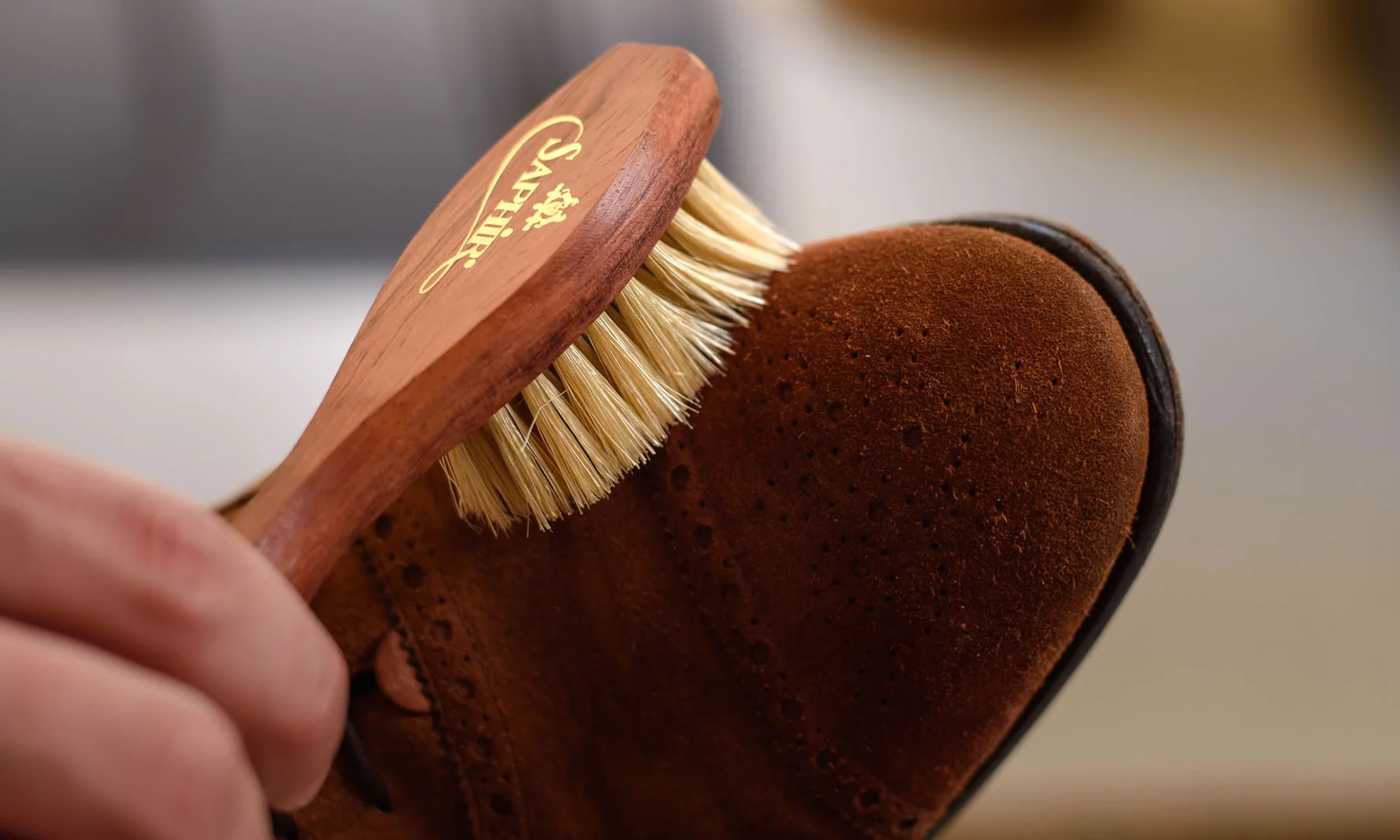
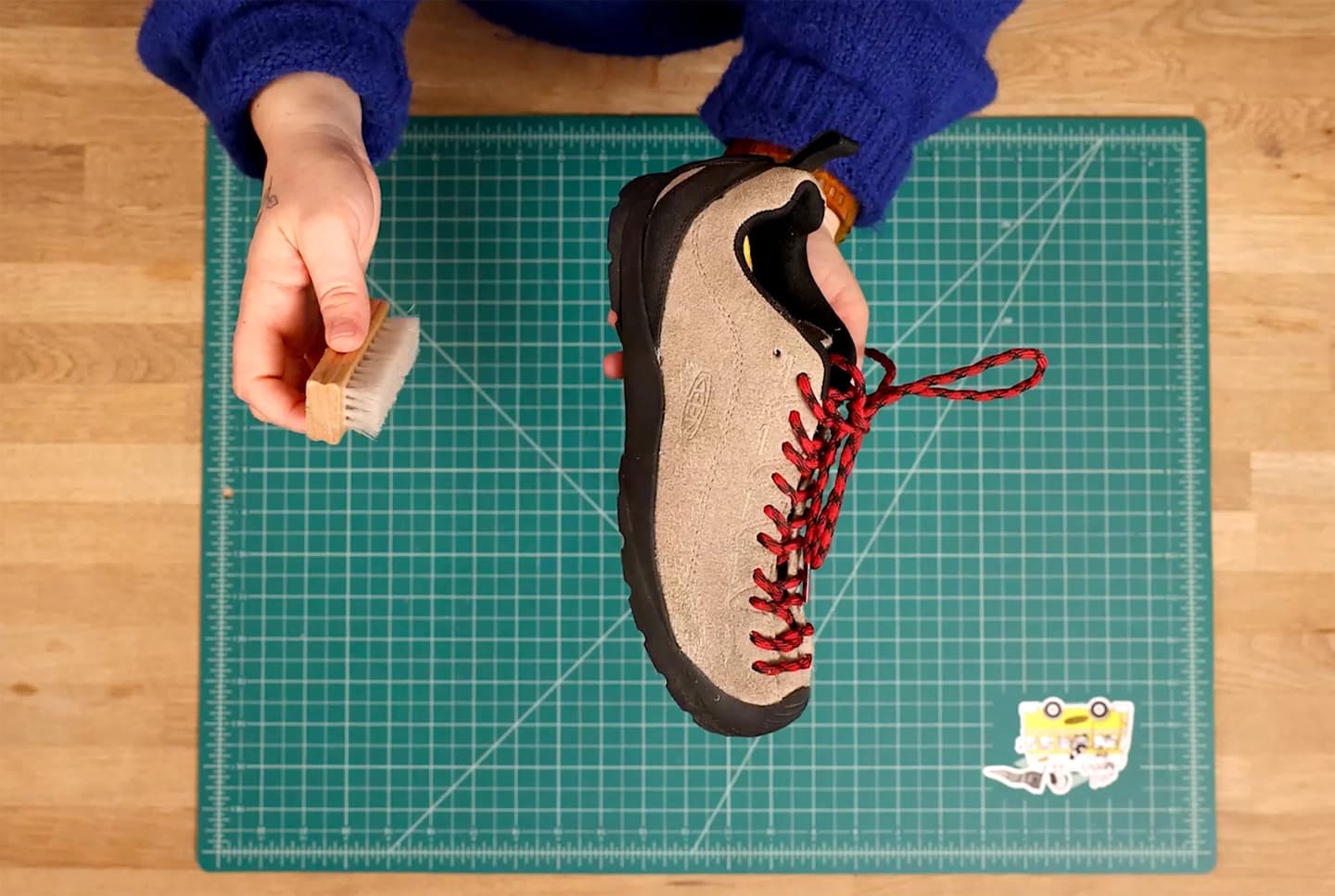
- Start by brushing off extra dirt with a suede brush, gently removing dirt and debris; KEEN says this helps maintain the nap and keeps grime from embedding in the fibers.
- If brushing is not enough, you can also use a damp cloth. KEEN cautions that this darkens the color momentarily, and that the darkening should go away as the shoe dries.
- That is where the routine cleaning section ends: KEEN does not name detergents, soaking, or machine washing for nubuck and suede in this guide, and a cautious reader should not add them on the brand's authority.
Stains: eraser first, vinegar or alcohol only with a patch test
For stubborn spots, KEEN's next rung up is an eraser. A suede eraser, or a plain pencil eraser, is rubbed gently on the affected area to lift marks without damaging the texture. Only when staining is heavy does the brand suggest liquids: wet a cloth with white vinegar or rubbing alcohol and lightly dab at the stain. KEEN's own cautions here are scrubbing and testing — dab rather than scrub, and be sure to test an inconspicuous area first. The test is the only caution in this section, and the brand gives no explanation for it beyond the caution itself.
The nap: water is the hazard, brushing is the fix
The nap is the collection of fibers that make up the soft, velvety texture. KEEN describes it as durable but very delicate and easily damaged by water. If the nap has flattened or looks wrong after cleaning, the brand's fix is mechanical rather than chemical: use a suede brush — or, as KEEN puts it, really any soft-bristled brush — to revitalize the nap, following the grain and brushing gently.
Waterproofing and off-season storage
Because the rough surface of nubuck and suede tends to absorb water, KEEN suggests you might consider a waterproofing spray as an extra layer of protection that, in the brand's words, protects without compromising the soft feel. The brand says it likes a Nikwax spray and notes that it is PFAS free — a product preference stated by KEEN, not an independent test. For seasonal storage, its step is simply to stuff the shoes with old newspaper, which helps maintain their shape and prevents creasing while they rest.
Where the advice stops
Everything above comes from one source, KEEN's shoe care page, "Shoe Care Tips: Nubuck and Suede," dated October 1, 2024, published as a two-minute read and framed by the brand around its shoes. The steps are general enough to sound familiar for other brands' sneakers/trainers and suede boots, but they are KEEN's instructions, aimed at readers of KEEN's care hub; the page does not set out rules for other makers' materials, warranty conditions, or specific spot-testing results.
To check this yourself, compare each step above against KEEN's care page, "Shoe Care Tips: Nubuck and Suede" (October 1, 2024), on keenfootwear.com, where the brand states the routine as cited here. If your shoes are from another brand, look for that maker's own care guide before assuming the same routine applies. And before any liquid — especially vinegar or rubbing alcohol — follow the source's own caution and test in a spot you cannot easily see.
From the source
Written from the pages listed above and checked by the editors. Spotted a mistake? Write to us: corrections keep the address and the first publication date.
Read next
More in CareHow to Remove Stains from Wool: Woolmark's Steps for Wine, Coffee, Grease, Ink and More
Wool is naturally stain resistant, according to Woolmark, but spills happen. Here are the wool-marketing body's official stain-removal steps for red wine, coffee, blood, ink, grease and makeup — plus the editors' own precautions beyond the page.
How to Iron Wool: Woolmark's Official Steps, Settings and Precautions (and Where the Advice Stops)
Woolmark's own care pages give a four-step method for pressing wool — a wool/medium/2-dot heat setting, reshaping by hand, steam or a light spray of water, and resting the garment flat before storing — plus a short list of things to avoid. This guide walks through those steps as Woolmark gives them, explains why many wool garments need no ironing at all, and points out where the advice leaves off.
Care·What the rule says··4 min
Caring for a GORE-TEX SHAKEDRY Garment: Gore's Special Washing Rules for Persistent-Beading Shells
GORE-TEX SHAKEDRY jackets (rain shells with a persistent beading surface) are the exception in GORE-TEX outerwear care: per Gore's care instructions page, they have no textile outer layer, so you should not apply a DWR treatment, and you wash them on a delicate cycle at 105°F/40°C without tumble drying or ironing. This guide sets out the brand's special-care steps as stated, and how they differ from care for standard GORE-TEX outerwear.