Labels, Claims & Rights·Explainer
OCS vs GOTS: What the Organic Labels on Cotton Clothing Actually Certify — and What the Difference Is
Both labels point to organic cotton, but they certify different things. Textile Exchange explains how organic claims work from the farm to the finished garment, where OCS and GOTS diverge, and what the December 2022 change on GOTS inputs means for chain of custody.
Contents
A tag reading "organic cotton" can sit on a t-shirt or a sweater/jumper for all sorts of reasons, and the label itself usually tells you less than you might hope. Two names you may see are the Organic Content Standard (OCS) and the Global Organic Textile Standard (GOTS). They are not interchangeable, and knowing what each one actually covers helps you read a clothing label with more confidence.
Textile Exchange, the nonprofit that owns the OCS, states the difference plainly: "The difference between the OCS and the Global Organic Textile Standard (GOTS) is that GOTS has additional processing requirements that must be met, and a 70% requirement and restrictions on other fibers that are allowed to be blended." In other words, both track organic fiber through the supply chain, but GOTS layers extra rules on top for processing, minimum content, and which fibers can be mixed in.
The word "organic" is legally controlled — but only at the farm
Textile Exchange's explainer on organic cotton certification draws the key line: "The term “organic” is legally controlled. That means that a farm must be certified to its relevant government-controlled organic standard to sell its cotton as organic." That legal requirement applies to growing the cotton. Once it leaves the farm, "it isn’t covered by the same legal protections."
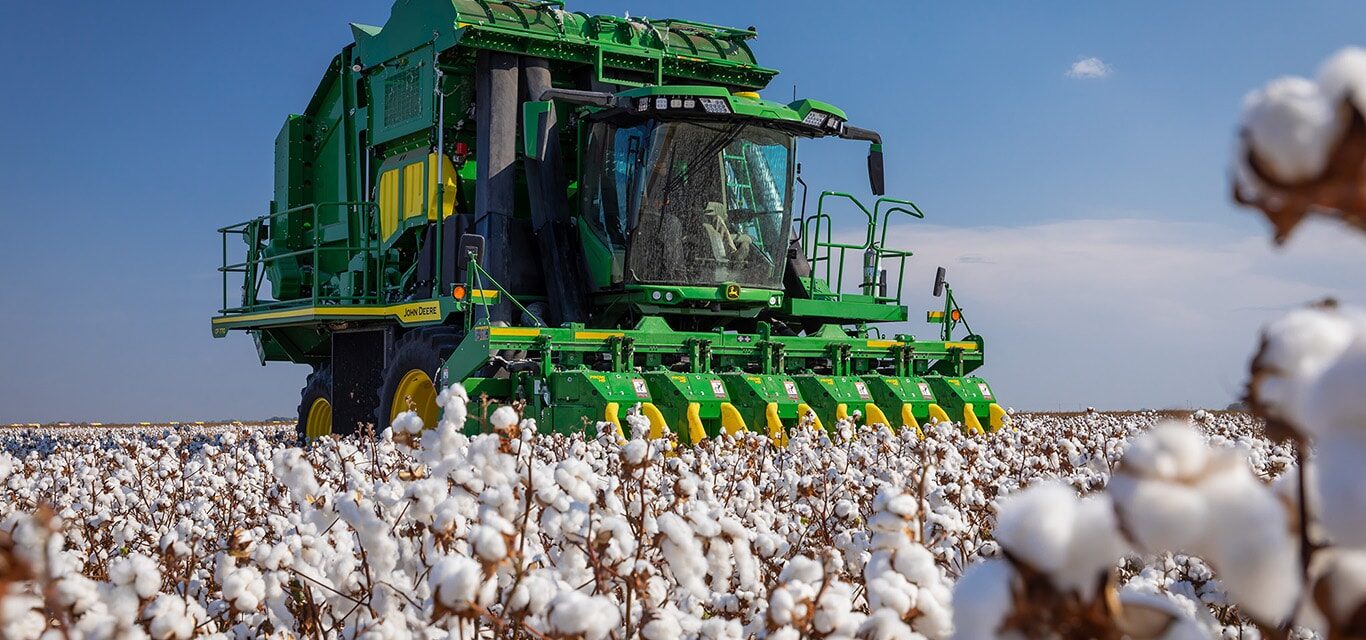
This is where voluntary standards step in. According to Textile Exchange, a company "might choose to use a tool like Textile Exchange’s Organic Content Standard (OCS) or the Global Organic Textile Standard (GOTS) to keep track of these fibers as they move from the gin through to the final product." The OCS is "a voluntary global standard that sets the criteria for third-party certification of organic materials and chain of custody."
What OCS chain-of-custody certification involves
Under the OCS, every facility handling the fibers after the gin is audited. Textile Exchange describes it as follows: "Every facility that handles the organically grown fibers from the gin to the final product needs to be audited against OCS criteria, including measures for keeping organic content separate and accurately reconciling volumes." Each sale along the way also gets paperwork: "Every time organic cotton products change ownership, they need to be accompanied by a transaction certificate too."

There is a limit worth knowing before you shop: labeling happens only at the very end of the chain. Per Textile Exchange, "A company can only claim that a product contains cotton certified to the Organic Content Standard if the final product is certified up to the brand."
The December 2022 change on GOTS inputs
For years, OCS-certified products could include GOTS-certified inputs — a GOTS yarn could go into an OCS fabric. Textile Exchange says that changed on December 1, 2022: "as of December 1, 2022, Textile Exchange’s OCS has ceased accepting GOTS inputs from sites unless we receive all GOTS transaction certificate data that provides traceability back to the original farm source." In addition, "all first processors (e.g. cotton gins) that provide GOTS inputs into an OCS product down the supply chain must now also be certified to the OCS."
Textile Exchange frames the reason as data quality: accepting GOTS content "has helped to keep costs down for suppliers in the past," but it "has also meant that chain of custody data has been fragmented between the two organizations."
A transition is coming
If you buy garments over the next few years, the label landscape may shift. Textile Exchange is consolidating its standards into the Materials Matter Standard. Per its OCS page, "The criteria for Materials Matter Standard were released on December 12, 2025, with the standard becoming effective on December 31, 2026 and mandatory from December 31, 2027." Organic cotton will move across gradually: the OCS "will continue to play a central role through a gradual transition pathway for the Organic Content Standard into the Materials Matter system." The dates above were published on Textile Exchange's pages at the time of writing and could change.
What this means at the label
- An OCS label, as Textile Exchange describes it, verifies organically grown content and chain of custody from gin to final product, with third-party audits at each stage.
- A GOTS label, in Textile Exchange's wording, adds "additional processing requirements," a "70% requirement," and "restrictions on other fibers that are allowed to be blended." The supplied Textile Exchange pages describe those GOTS specifics but do not detail which stages of the chain GOTS covers.
- For the OCS, the voluntary scheme picks up after the farm: the farm certification is government-controlled, and once the cotton leaves the farm, Textile Exchange says it "isn’t covered by the same legal protections."
- The OCS accepts fiber only from farms certified "under one of IFOAM’s Family of Standards," per Textile Exchange.
To check a claim yourself, look for the standard's name or logo on the garment's label or product page, then use Textile Exchange's public directory — the organization says you can "Consult our directory to find a supplier or confirm whether a company is certified to the OCS." If a brand claims organic content without a named certification, the claim rests on the farm-level legal standard alone and, once the cotton leaves the farm, on whatever tracking the company chose to apply — which is exactly the gap the OCS and GOTS exist to close.
From the source
Written from the pages listed above and checked by the editors. Spotted a mistake? Write to us: corrections keep the address and the first publication date.
Read next
More in LabelsWhat Gore Says Its Certifications Cover: bluesign®, OEKO-TEX STANDARD 100 and GRS on GORE-TEX Products, as the Brand States Them
Gore, the maker of GORE-TEX fabrics and laminate, describes three third-party certifications on its own blog: bluesign®, OEKO-TEX® STANDARD 100 and the Global Recycled Standard (GRS). This profile collects those brand-attributed statements, including the share of shipped Fabrics volume the brand reports as certified, where the figures stop, and how you can check certifications on a product you are considering.
Labels·What the rule saysUK··5 min
What the rule says (UK): the DMCC Act 2024 ban on fake and hidden incentivised reviews — and what it means when you read clothing and shoe reviews
The UK's Digital Markets, Competition and Consumers Act 2024 adds prohibitions on submitting or commissioning fake reviews, reviews that conceal an incentive, and publishing reviews in a misleading way. A reader's guide to what the Act's Explanatory Notes say, and how to read clothing and shoe reviews with it in mind.
What the EU Ecolabel on Clothing and Textiles Actually Certifies — Criteria, Validity Through 2028 and the Ongoing Revision
The EU Ecolabel is the European Union's official voluntary label for environmental excellence, and it covers both textile products and footwear. Based on the European Commission's own product-page material, we explain what the label guarantees for textiles and shoes, which criteria decisions currently apply, how long those criteria remain valid after the 23 December 2025 amendment, and what the ongoing revision means for shoppers.