Labels, Claims & Rights·Explainer
What the GOTS Label Grades Mean on Clothing: 'Organic' vs 'Made with Organic (Materials)', In-Conversion Grades, and Which Claims Are Not Allowed
A guide to the four GOTS label grades, what a label must show for the certification to be verifiable, and which shorthand claims the standard itself rules out — including 'GOTS cotton' and 'made with GOTS-certified fabric'.
Contents
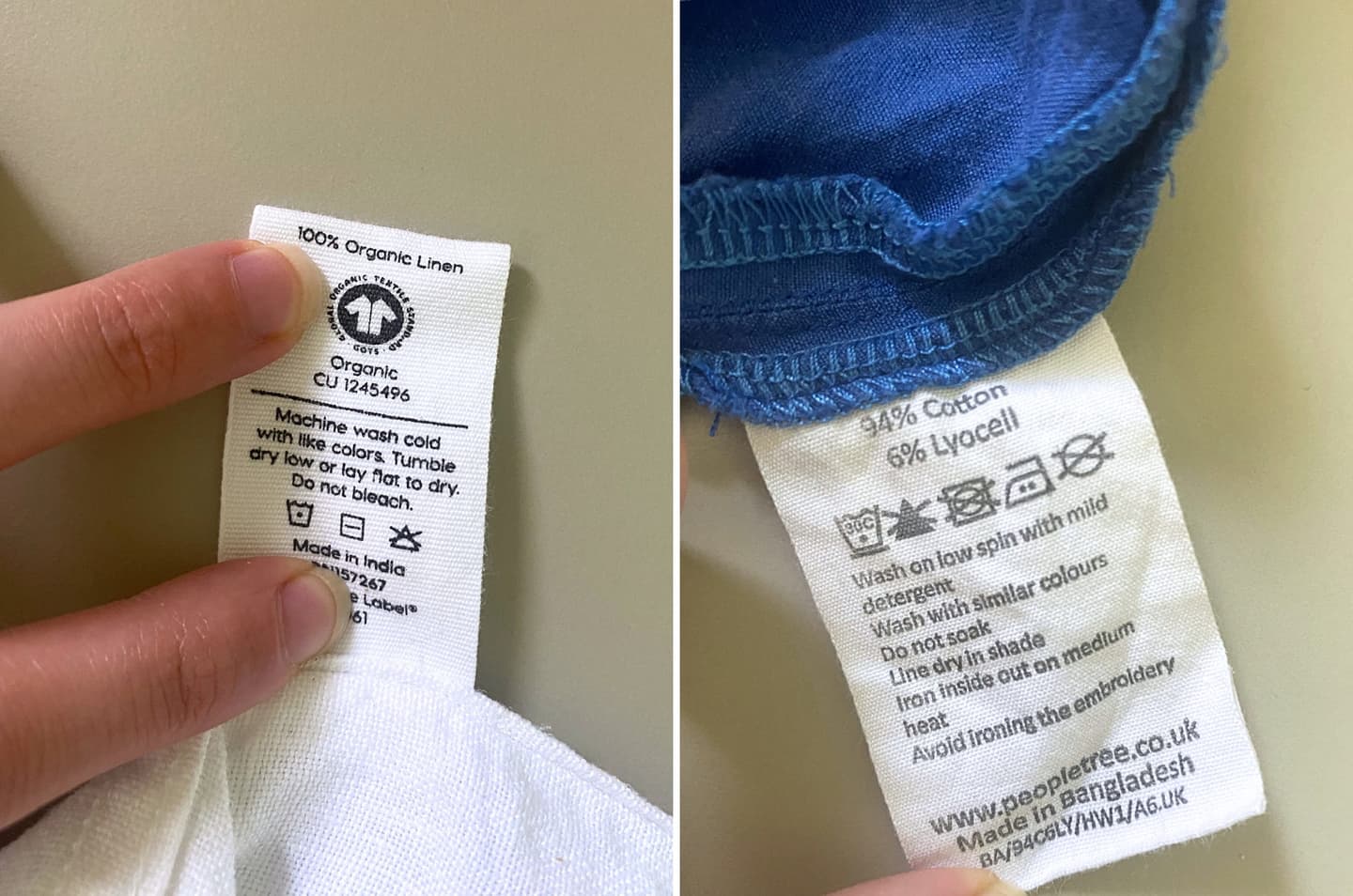
The GOTS label — the logo and wordmark of the Global Organic Textile Standard — appears on clothing tags, but the small print around it is where the real information lives. According to GOTS's own labelling guidance, a label grade tells you how much certified organic fibre a product contains, and every grade must be printed alongside two further details: a reference to the certification body and a certification number. Together, those elements are what make a GOTS claim checkable rather than a matter of trust.
This explainer walks through the four grades GOTS defines, what a compliant label and online listing must show, and which claims GOTS itself rules out. All requirements below are as stated in the GOTS labelling guidance on global-standard.org as captured on September 11, 2026; standards bodies revise their rules, so it is worth checking the current version before relying on a detail.
The four label grades
GOTS distinguishes products by fibre content and by whether the organic fibres are fully certified or in conversion. The four grades, as listed in the labelling guidance, are:
- "Organic" — 95%+ certified organic fibres
- "Organic in-conversion" — 95%+ certified organic in-conversion fibres
- "Made with x% organic materials" — 70–94% certified organic fibres
- "Made with x% organic in-conversion materials" — 70–94% certified organic in-conversion fibres
The practical difference is straightforward: a garment labelled "Organic" contains 95% or more certified organic fibres, while a "Made with x% organic materials" grade signals a product whose certified organic fibre content falls in the 70–94% range. The in-conversion grades work the same way but apply to fibre GOTS calls certified organic in-conversion fibres.
What a label must show
The percentage alone is not enough. Per GOTS's guidance, a GOTS product label must always include the GOTS logo, the correct label grade, a reference to the certification body, and the certification number of the certified entity. The logo must remain readable, correctly proportioned and visible at the point of sale. GOTS says the certification body and number matter because they allow the product to be traced back through all certified facilities — what the standard calls complete transparency from fibre to finished product.
What online listings must show
For online shops, GOTS applies the same elements to the product listing page. GOTS says information online must match the physical product listing, and that a certified product listing must include the logo, the grade, the certification body reference and the certification number — though the exact placement does not matter as long as it is easily visible. Two further placement rules from the guidance: GOTS signs shall not be used in website headers and footers, and the logo may only appear in direct association with certified products or certification-related content.
The claims GOTS does not allow
Two common shorthands are explicitly rejected in GOTS's labelling guidance:
- "GOTS cotton" and "GOTS-certified organic cotton" — GOTS explains that it is not an organic cotton standard: certification covers the processing of textile goods made with organic fibres, not raw cotton itself, and organic raw fibres must be certified by an accepted external organic certification before entering the GOTS chain of custody.
- "Made with GOTS-certified fabric/yarn/other components" — GOTS says partial certification cannot be represented as full product certification, and that if GOTS-certified fabric is sewn in an uncertified facility the chain of custody is broken and the final product is not considered certified.
These exclusions follow from how GOTS works, as described on the same page: the standard sets requirements for the entire textile value chain — spinning, weaving and knitting, wet-processing, manufacturing, packaging, labelling and trading — and for an end product to carry a GOTS label, every company that is part of the process must be certified. GOTS states that onsite inspection and certification of processors, manufacturers and traders is performed by independent third-party certification bodies.
How to check a GOTS claim yourself
When you see the GOTS logo on a product page or a care label, look for the full set of details: the grade wording matching one of the four official grades, a named certification body, and a certification number. If the product page says only "GOTS cotton" or refers to GOTS-certified fabric without full product certification, that wording does not match GOTS's own labelling rules. For online purchases, confirm the logo, grade and certification details appear on the product listing page itself — not just in a site banner — and that the wording matches the physical label when the item arrives. If anything is unclear, the certification body and number on the label are the reference points for verifying the certification; requirements can change between standard revisions, so compare against the current GOTS labelling guidance rather than this article alone.
From the source
Written from the pages listed above and checked by the editors. This article was revised after publication; see corrections. Spotted a mistake? Write to us: corrections keep the address and the first publication date.
Read next
More in LabelsWhat Gore Says Its Certifications Cover: bluesign®, OEKO-TEX STANDARD 100 and GRS on GORE-TEX Products, as the Brand States Them
Gore, the maker of GORE-TEX fabrics and laminate, describes three third-party certifications on its own blog: bluesign®, OEKO-TEX® STANDARD 100 and the Global Recycled Standard (GRS). This profile collects those brand-attributed statements, including the share of shipped Fabrics volume the brand reports as certified, where the figures stop, and how you can check certifications on a product you are considering.
Labels·What the rule saysUK··5 min
What the rule says (UK): the DMCC Act 2024 ban on fake and hidden incentivised reviews — and what it means when you read clothing and shoe reviews
The UK's Digital Markets, Competition and Consumers Act 2024 adds prohibitions on submitting or commissioning fake reviews, reviews that conceal an incentive, and publishing reviews in a misleading way. A reader's guide to what the Act's Explanatory Notes say, and how to read clothing and shoe reviews with it in mind.
What the EU Ecolabel on Clothing and Textiles Actually Certifies — Criteria, Validity Through 2028 and the Ongoing Revision
The EU Ecolabel is the European Union's official voluntary label for environmental excellence, and it covers both textile products and footwear. Based on the European Commission's own product-page material, we explain what the label guarantees for textiles and shoes, which criteria decisions currently apply, how long those criteria remain valid after the 23 December 2025 amendment, and what the ongoing revision means for shoppers.