Labels, Claims & Rights·Explainer
What the OEKO-TEX STANDARD 100 Label on Clothing Actually Certifies
STANDARD 100 is OEKO-TEX's label for textiles tested for harmful substances, from yarn to finished product. Here is what the testing covers, how the four product classes differ, how long a certificate lasts, and how to check a label yourself.
Contents
The OEKO-TEX STANDARD 100 label turns up on everything from baby onesies to jackets to bedsheets, often alongside other tags promising organic or recycled content. What it actually certifies is easy to misread. This explainer sets out what the certifying body says the label means, how the four product classes work, and where the label's claims stop.
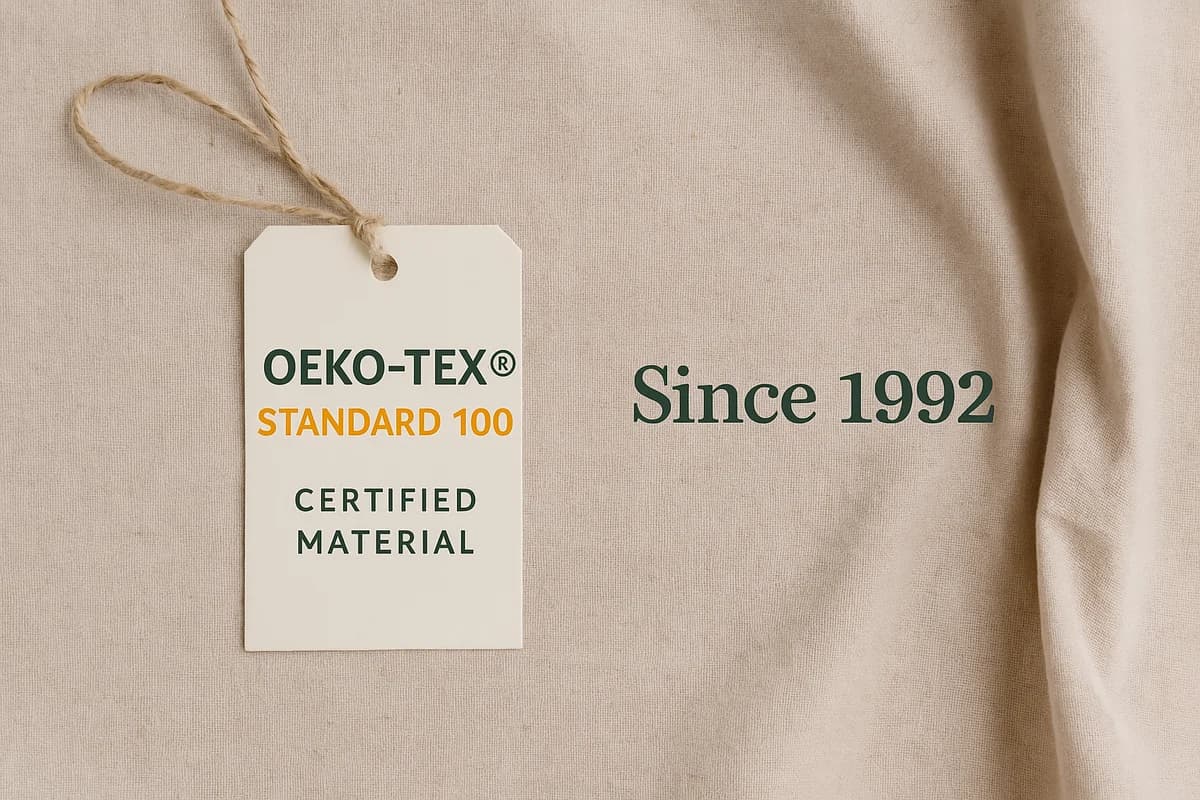
According to OEKO-TEX, STANDARD 100 is "a label for textiles tested for harmful substances" that "sets the benchmark for textile safety, from yarn to finished product." The organization states that every item bearing the label is certified as having passed safety tests for harmful substances, and that testing covers every component: "Every thread, button and accessory have been tested against a list of over 1,000 harmful substances." OEKO-TEX also states that "[t]he certified article is harmless to human health" — a claim from the certifier itself, not an independent measurement.
Four classes, four levels of strictness
STANDARD 100 tests are not uniform across all products. OEKO-TEX says its laboratory tests for harmful substances are based on the intended use of the textiles and materials, and that stricter human ecology requirements must be met the more intensive the skin contact and the more sensitive the skin is. The standard divides products into four classes:
- Product Class 1: products for babies and children up to 3 years, such as diapers. OEKO-TEX describes this class as having the strictest requirements and limit values.
- Product Class 2: products with direct skin contact, such as bed linens.
- Product Class 3: products without direct skin contact, such as jackets.
- Product Class 4: home textiles and other decoration materials, such as curtains.
In practice, this means a Class 1 certificate on baby clothing reflects tighter limit values than a Class 3 certificate on a jacket. So it is worth looking at which product class a certified item falls under rather than treating the label as a single, uniform promise.
What the tests reference and how limits are kept current
OEKO-TEX says its certification is designed to comply with global regulations, including — in the page's own phrasing — the annexes XVII and XIV of the REACH directive, CPSIA and the ECHA-SVHC candidate list. It uses globally standardized test criteria and states that it reviews its limit values for harmful substances at least once a year. Certificates themselves are issued for one year, so a certificate's validity is tied to a specific period rather than being open-ended.
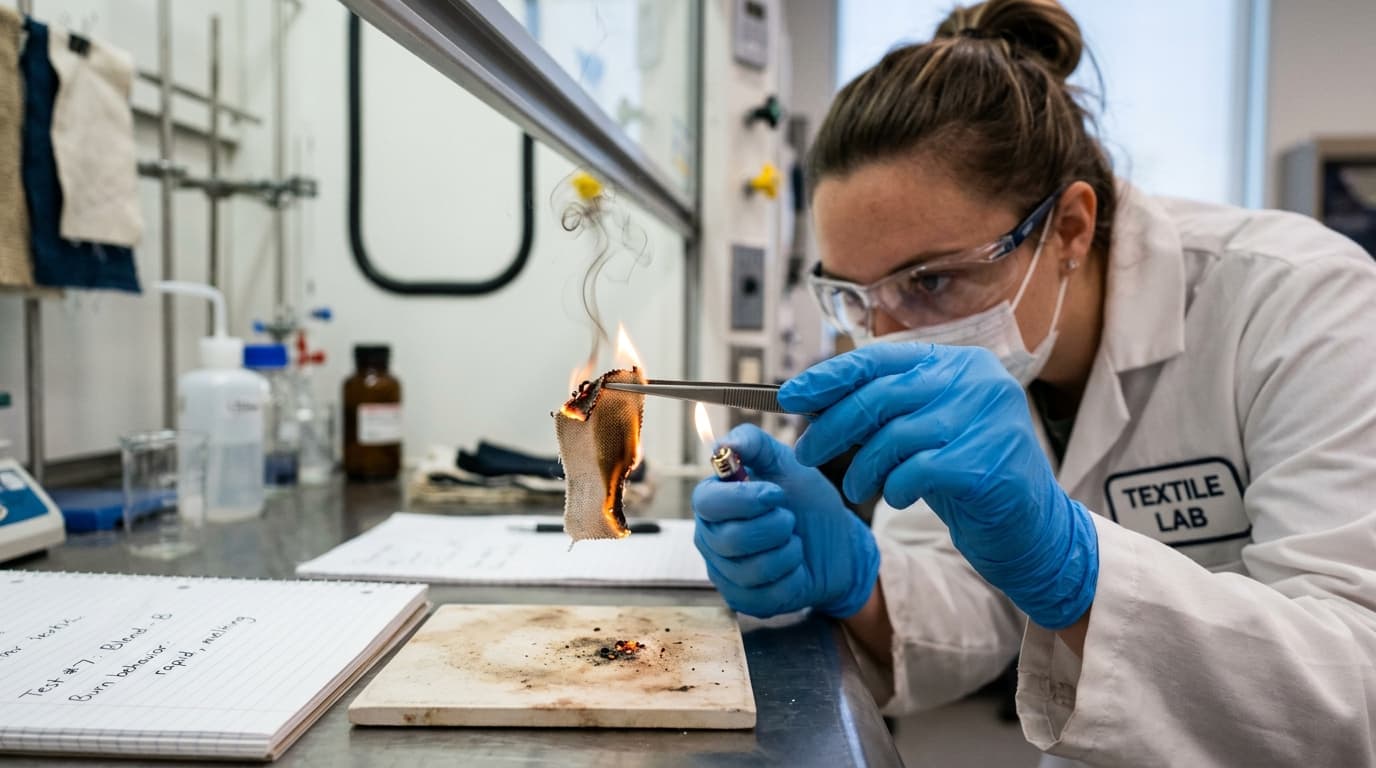
The certification process described by OEKO-TEX runs from application with a material sample, through verification and laboratory testing of that sample, to an on-site visit inspecting and evaluating the company, a detailed test report and finally the one-year certificate.
What the label does not say
STANDARD 100 is a harmful-substances standard, not a fiber-origin standard. The harmful-substances testing described on the page does not cover labor conditions. OEKO-TEX lists organic content under a separate standard in its portfolio (OEKO-TEX ORGANIC COTTON), so organic claims come from a different label rather than from STANDARD 100. Note too that recycled materials and special articles such as prams, orthopedic aids or personal protective equipment are described by OEKO-TEX as optional certification areas, so coverage varies by article.
How to check a label yourself
OEKO-TEX provides a verification route that anyone can use. The steps it gives are simple:
- Find the OEKO-TEX label on the garment and locate the QR code or the certificate number printed on it.
- Scan the QR code, or enter the certificate number in the OEKO-TEX Label Check on the organization's website.
- Confirm that the certificate is valid for the product you are checking.
Checking the certificate this way tells you whether the safety claim on the tag matches a live certification, as OEKO-TEX describes the process. It does not replace reading the rest of the care and composition labels on the garment.
From the source
Written from the pages listed above and checked by the editors. Spotted a mistake? Write to us: corrections keep the address and the first publication date.
Read next
More in LabelsWhat Gore Says Its Certifications Cover: bluesign®, OEKO-TEX STANDARD 100 and GRS on GORE-TEX Products, as the Brand States Them
Gore, the maker of GORE-TEX fabrics and laminate, describes three third-party certifications on its own blog: bluesign®, OEKO-TEX® STANDARD 100 and the Global Recycled Standard (GRS). This profile collects those brand-attributed statements, including the share of shipped Fabrics volume the brand reports as certified, where the figures stop, and how you can check certifications on a product you are considering.
Labels·What the rule saysUK··5 min
What the rule says (UK): the DMCC Act 2024 ban on fake and hidden incentivised reviews — and what it means when you read clothing and shoe reviews
The UK's Digital Markets, Competition and Consumers Act 2024 adds prohibitions on submitting or commissioning fake reviews, reviews that conceal an incentive, and publishing reviews in a misleading way. A reader's guide to what the Act's Explanatory Notes say, and how to read clothing and shoe reviews with it in mind.
What the EU Ecolabel on Clothing and Textiles Actually Certifies — Criteria, Validity Through 2028 and the Ongoing Revision
The EU Ecolabel is the European Union's official voluntary label for environmental excellence, and it covers both textile products and footwear. Based on the European Commission's own product-page material, we explain what the label guarantees for textiles and shoes, which criteria decisions currently apply, how long those criteria remain valid after the 23 December 2025 amendment, and what the ongoing revision means for shoppers.