Labels, Claims & Rights·What the rule saysUK
What the Rule Says (UK): The 14-Day Right to Cancel an Online Clothing or Shoe Order Under the Consumer Contracts Regulations 2013
When you buy clothes or shoes online in the UK and simply change your mind — the item is fine, but you no longer want it — your right to return is governed by a different rule from the faulty-goods rules: the Consumer Contracts (Information, Cancellation and Additional Charges) Regulations 2013. This explainer sets out what the Regulations say: when the 14-day cancellation period starts (for most orders, from delivery, with special rules for split deliveries and subscription-style regular deliveries), that you can cancel without giving a reason, how the period is extended when the trader fails to tell you about the right to cancel, and the rules' own limits. All statements are drawn from the Regulations themselves as published on legislation.gov.uk, as read for this article.
Contents
Change-of-mind returns are a common situation in online shopping: the sneakers/trainers arrive, the item matches what was ordered, but you no longer want it. For that situation, UK law gives a specific right that is separate from the rules on faulty goods. It is the right to cancel a distance contract, set out in the Consumer Contracts (Information, Cancellation and Additional Charges) Regulations 2013. The Regulations "come into force on 13th June 2014" and "apply in relation to contracts entered into on or after that date", and the Consumer Protection (Distance Selling) Regulations 2000 no longer "apply in relation to contracts entered into on or after 13th June 2014".
The Regulations define who counts as a consumer: "an individual acting for purposes which are wholly or mainly outside that individual's trade, business, craft or profession". If you buy a jumper/sweater for yourself online from a business, you are in scope; the rules distinguish distance contracts, off-premises contracts and on-premises contracts, and the cancellation rules apply to distance contracts — which an online order is.
When the 14 days start
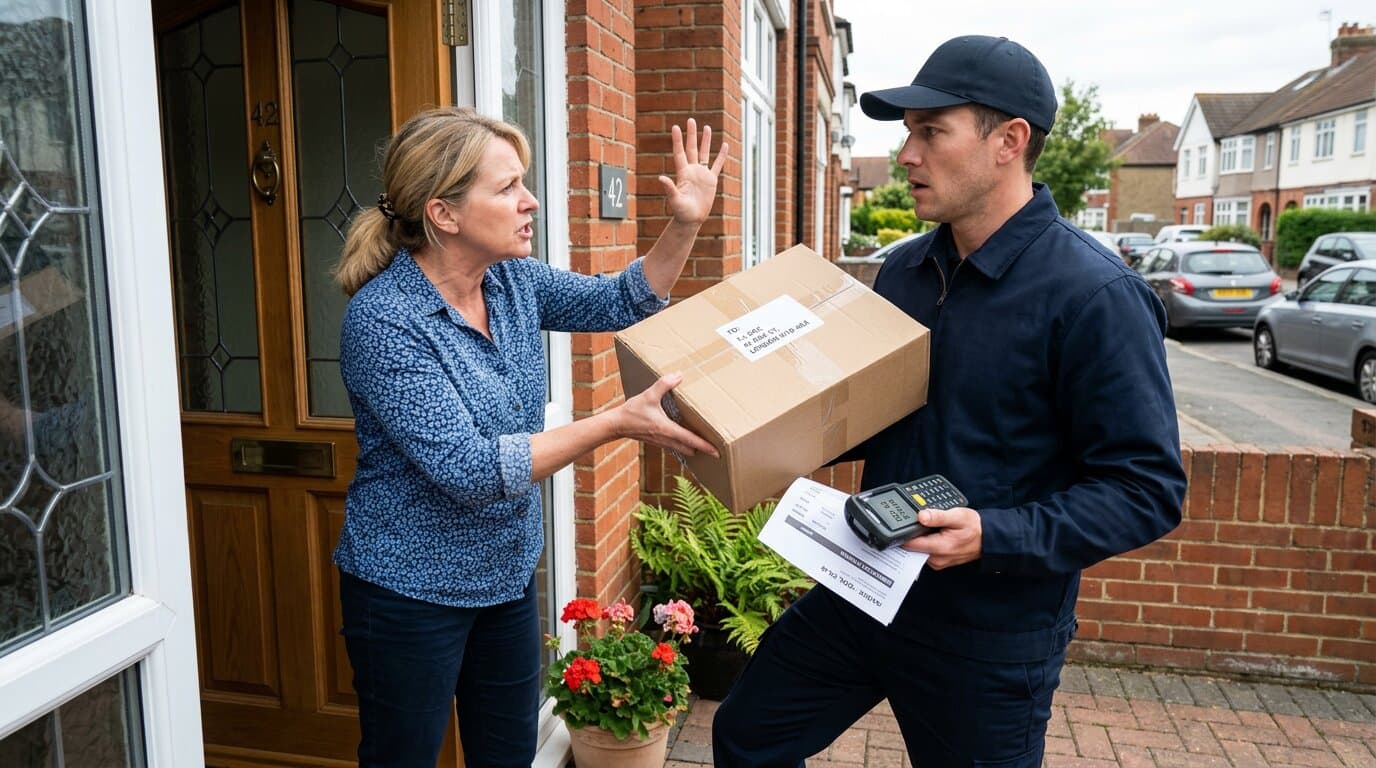
For an ordinary sales contract, the cancellation period runs from delivery, not from the moment of purchase. The Regulations say the period "ends at the end of 14 days after the day on which the goods come into the physical possession of" either the consumer or "a person, other than the carrier, identified by the consumer to take possession of them" — so leaving a parcel with a neighbour you nominated counts as receipt.
Split and regular orders work differently. Under regulation 30:
- If multiple goods are ordered in one order but some are delivered on different days, the period "ends at the end of 14 days after the day on which the last of the goods come into the physical possession of" the consumer or the nominated person.
- If goods "consisting of multiple lots or pieces of something are delivered on different days", the period ends 14 days after the last of the lots or pieces come into physical possession.
- If the contract is a sales contract "for regular delivery of goods during a defined period of more than one day" — for example a hypothetical subscription box of socks — the period instead "ends at the end of 14 days after the day on which the first of the goods come into the physical possession of" the consumer or the nominated person.
How you cancel, and what you lose by cancelling
During the cancellation period you may cancel "without giving any reason, and without incurring any liability except under these provisions". The Regulations themselves list the situations where liability can still arise: "regulation 34(3) (where enhanced delivery chosen by consumer); (b)regulation 34(9) (where value of goods diminished by consumer handling); (c)regulation 35(5) (where goods returned by consumer)". In practical terms for clothing and shoes: the legislation itself preserves consequences such as diminished value from handling — the difference between trying a jacket on at home, hypothetically, and wearing it heavily for a week. The Regulations also provide that "The consumer must bear the direct cost of returning goods under paragraph (2)", unless the trader has agreed to bear those costs or failed to provide the required information about them. The provisions that give effect to cancellation, including the liabilities in regulations 34 and 35 and the method of cancellation in regulation 32, sit in the Regulations themselves at the linked text — regulation 32 provides that "To cancel a contract under regulation 29(1), the consumer must inform the trader".
When the period is extended
The 14 days assume the trader told you about the right to cancel in the first place. Regulation 31 applies "if the trader does not provide the consumer with the information on the right to cancel required by paragraph (l) of Schedule 2". Where the trader gives that information within 12 months of the first day of the original 14-day window, "the cancellation period ends at the end of 14 days after the consumer receives the information"; otherwise "the cancellation period ends at the end of 12 months after the day on which it would have ended under regulation 30". The article does not cover the rest of the information duties in Part 2, which are set out separately in the Regulations.
What the Regulations do not cover
The right to cancel is not unlimited. The Explanatory Note to the Regulations states that "Regulations 6, 7 and 27 provide for a number of excluded contracts (such as contracts for gambling, health services and services of a banking or insurance nature) to which provisions in the Regulations do not apply". Everyday clothing and shoe purchases are not in that list, but readers buying gift cards alongside garments, or placing orders that bundle other services, should check regulations 6, 7 and 27 against their specific purchase.
A note on trader terms: a shop's returns page may restate the cancellation window in its own words — including phrases like "working days" — but on our reading of the Regulations as published, regulation 30 counts 14 days from the delivery days described above. Where a retailer's stated window and regulation 30 differ, that difference is what matters for the comparison; this article does not set out how a court would treat a stricter returns policy, so readers who hit that conflict should rely on the Regulations' text themselves or take advice. As regulation 31 shows, the trader's information about the right to cancel also affects how long the period runs.
How to check this yourself: open the Regulations at www.legislation.gov.uk/uksi/2013/3134 — the published text there is the version to check for any amendments in force — read regulation 29 for the cancellation right and regulation 30 for when the 14 days run, then compare those dates with the delivery confirmation for your own order, counting 14 days after the day your parcel reached you or the person you identified to receive it. Provisions may be amended over time, so always read the version in force at the time of your purchase.
From the source
Written from the pages listed above and checked by the editors. Spotted a mistake? Write to us: corrections keep the address and the first publication date.
Read next
More in LabelsHow to Return an H&M Order from the US: The 30-Day Window, the $5.99 Mail-In Fee, and What Counts for In-Store Returns
H&M's US return policy, as stated on the brand's own customer-service page: a 30-day decision window, free in-store returns with a receipt and tags, a $5.99 fee deducted from mail-in returns of online purchases, refunds to the original payment method, and a gift-card caveat that matters. Here is how the policy works, what it excludes, and how to check the terms before you send anything back.
Labels·What the rule saysUS··3 min
What the Rule Says (US): The Fur Products Labeling Act and FTC Fur Rules — What Must Appear on a Fur Garment Label
In the United States, fur garments sold to consumers fall under the Fur Products Labeling Act and the FTC's Fur Rules (16 CFR Part 301). According to the FTC, the rules require fur products to be labeled with information such as the animal's name, the manufacturer's name, and the garment's country of origin. This explainer sets out the legal basis, the rule's core labeling requirement, and the FTC's rulemaking history, based on the FTC's Fur Rules page.
Labels·What the rule saysUK··4 min
What the Rule Says (UK): The CMA Green Claims Code — What Environmental Claims on Clothes Must Be
In the UK, environmental claims on clothing fall under consumer protection law backed by the Competition and Markets Authority's Green Claims Code, published 20 September 2021, and a January 2026 supply-chain guidance. What the rules require, who in the supply chain is responsible, and how a shopper can check a claim.