Labels, Claims & Rights·What the rule saysUK
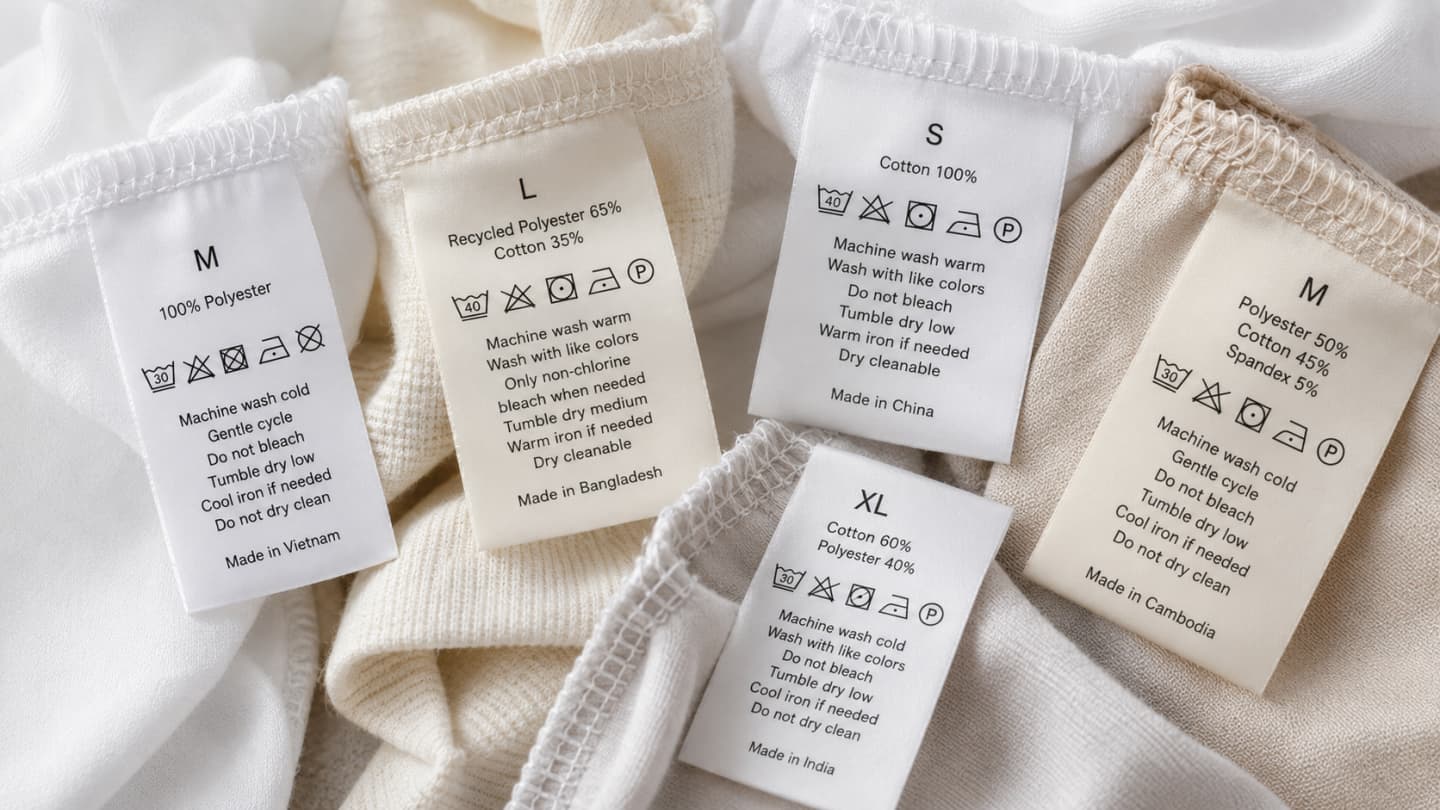
What the Rule Says (UK): The CMA Green Claims Code — What Environmental Claims on Clothes Must Be
In the UK, environmental claims on clothing fall under consumer protection law backed by the Competition and Markets Authority's Green Claims Code, published 20 September 2021, and a January 2026 supply-chain guidance. What the rules require, who in the supply chain is responsible, and how a shopper can check a claim.
Watch The Sustainable Label Breakdown (Certifications Explained)
The recording belongs to Laura VonV, not to this publication, and it plays from YouTube: opening it lets YouTube see the request.Watch on YouTube instead.
Contents
A sweater/jumper labeled "made from recycled materials", a sneakers/trainers described as "eco-friendly", a tag saying a dress is "compostable" — these are green claims, and in the UK they are regulated. The Competition and Markets Authority (CMA) is the UK's primary competition and consumer authority, and it sets out how businesses should make such claims in its Green Claims Code.
The Code itself is guidance published on GOV.UK on 20 September 2021. It explains how businesses meet their existing obligations under consumer protection law when making environmental claims about goods and services — meaning the legal duty already exists; the Code tells businesses how to comply with it.
Why it matters to shoppers: the CMA's campaign page states that 40% of green claims made online could be misleading. The Code is meant to make claims genuine rather than decorative marketing.
What the Code asks of a claim
The campaign page says the Code sets out six key points a business should check whether its environmental claims are genuinely green. The core requirements come back to a few things that also matter when you read a clothing label yourself. A claim must be clear and accurate, and businesses have commercial freedom to make environmental claims provided that.
A claim must also be backed by evidence, and that evidence must be current. The supply-chain guidance restates the expectation that businesses should be able to back up environmental claims with robust, credible evidence, and the Code's own text is cited as saying evidence should be up to date. Green claims can reach shoppers through many channels, not just words on a label — the CMA lists statements, symbols, emblems, logos, graphics, colors and product brand names among the methods businesses use.
Who is responsible across the supply chain
On 22 January 2026 the CMA published additional guidance, "Making green claims: Getting it right, across the supply chain", to be read alongside the Green Claims Code. It was written in response to businesses asking who is actually responsible when the information behind a claim sits with someone else in the chain — the supplier of a fabric, the manufacturer of a garment, the brand, or the retailer that sells it.
The short answer it gives: everyone in the chain has a part to play. The guidance is addressed to all businesses whether a retailer, brand, or manufacturer, and states that every business must comply with consumer law and help ensure consumers get clear, honest and accurate information. Businesses that pass information from others on to consumers still need to take steps to make sure those claims are accurate and not misleading.
Because different businesses hold different information, the guidance acknowledges that obtaining what is needed to verify a claim can be difficult, but says it is important that businesses making environmental claims take steps to verify them. The CMA also signals where it is likely to act: a business that has published guidance available to it — such as the Green Claims Code — or has been the subject of previous enforcement, is expected to be clearer about its obligations. The CMA says it is more likely to target conduct that is more harmful to consumers.
The clothing-specific layer
Fashion is called out specifically. Alongside the general Code, the CMA has produced a fashion retail sector compliance document, and the 2026 supply-chain guidance points businesses to it for advice on making green claims about fashion products. In that sector, the expectation includes internal processes for verifying and making environmental claims and arrangements to regularly check that claims remain correct — so, in principle, a "recycled polyester" claim on a jacket should be the result of a checked, evidenced process, not an assumption passed down the chain.
Where the guidance stops
The 2021 guidance is explicitly not exhaustive and not legal advice; it covers the areas the CMA considers most likely to be relevant to enforcement. The 2026 document is likewise limited to the CMA's use of its consumer powers and does not bind other consumer protection enforcers. Advertising in the UK is separately overseen by the Advertising Standards Authority under the CAP and BCAP Codes, which the Green Claims Code is stated to be consistent with. Online marketplaces, too, are noted as having their own responsibilities when sellers market products through them.
What a shopper can do with this
If a garment's claim is vague — "better for the planet", "green choice" — the legal standard described above gives you grounds to expect more: a claim that is clear, accurate and evidenced. The CMA's campaign site presents the six key points alongside consumer tips, business guidance and a quiz to check your knowledge of the Code, which is the most direct official route for buyers who want to judge claims themselves.
To check a specific claim yourself, look on the CMA's own pages: the GOV.UK guidance published 20 September 2021 carries the full Code and its checklist, the campaign site greenclaims.campaign.gov.uk presents the six key points, and the 22 January 2026 supply-chain guidance shows how the rules attach to each stage from raw material to retailer. Guidance can be updated, so when you read a page, check the date shown and any update notices on it to see which version you are looking at.
From the source
Written from the pages listed above and checked by the editors. Spotted a mistake? Write to us: corrections keep the address and the first publication date.
Read next
More in LabelsHow to Return Clothes to ASOS from the US: The 28-Day Window, Guest Fees, Final Sale Exclusions and Refund Timing
A step-by-step guide to returning an ASOS order from the US, as the retailer's customer-care pages state the rules: the 28-day return window from delivery, free tracked returns for account holders via UPS Ground, the $4.95 fee deducted from guest refunds, the no-exchanges refund policy, Final Sale exclusions, condition inspection, packing rules and refund timing. Per ASOS customer-care pages as read on 5 October 2026; policies change, so check the current page before ordering.
What Happens to the Textile Exchange Labels on Your Clothes: The Materials Matter Transition, Explained
Textile Exchange is consolidating its familiar material standards (RWS, RDS, GRS, OCS and others) into a single Materials Matter Standard. Here is the published timeline — criteria released December 12, 2025; effective December 31, 2026; mandatory for Tier 4 audits December 31, 2027; all claims and labels transitioned by June 30, 2029 — what the labels on hang tags must show in the meantime, and how to check a certified claim yourself.
Labels·What the rule saysEU··4 min
What the Rule Says (EU): The Revised Waste Framework Directive and Mandatory EPR for Textiles and Footwear — In Force 16 October 2025
The EU's targeted revision of the Waste Framework Directive entered into force on 16 October 2025, introducing common EU-wide rules for extended producer responsibility (EPR) schemes for textile and footwear products. Producers will pay a fee for each item they place on the market, with fees eco-modulated based on sustainability criteria such as durability and recyclability, drawing on criteria developed under the Ecodesign for Sustainable Products Regulation. The revision also sets new rules for how separately collected textiles must be treated and sorted. Member States have 20 months to transpose the Directive and 30 months to establish their EPR schemes, so the direct effects on shoppers will arrive gradually as national laws change. This explainer summarizes what the rule says, in the Commission's own words, and how the reader can track implementation.