Labels, Claims & Rights·What the rule saysUS
What the Rule Says (US): The FTC's Made in USA Labeling Rule (16 CFR Part 323) — What the "All or Virtually All" Standard Means on Clothing and Other Products
The FTC's "all or virtually all" standard for unqualified Made in USA claims, now codified at 16 CFR Part 323, what qualified claims look like, and how this voluntary marketing rule sits alongside the separate mandatory country-of-origin labels required for textile and wool products.
Contents
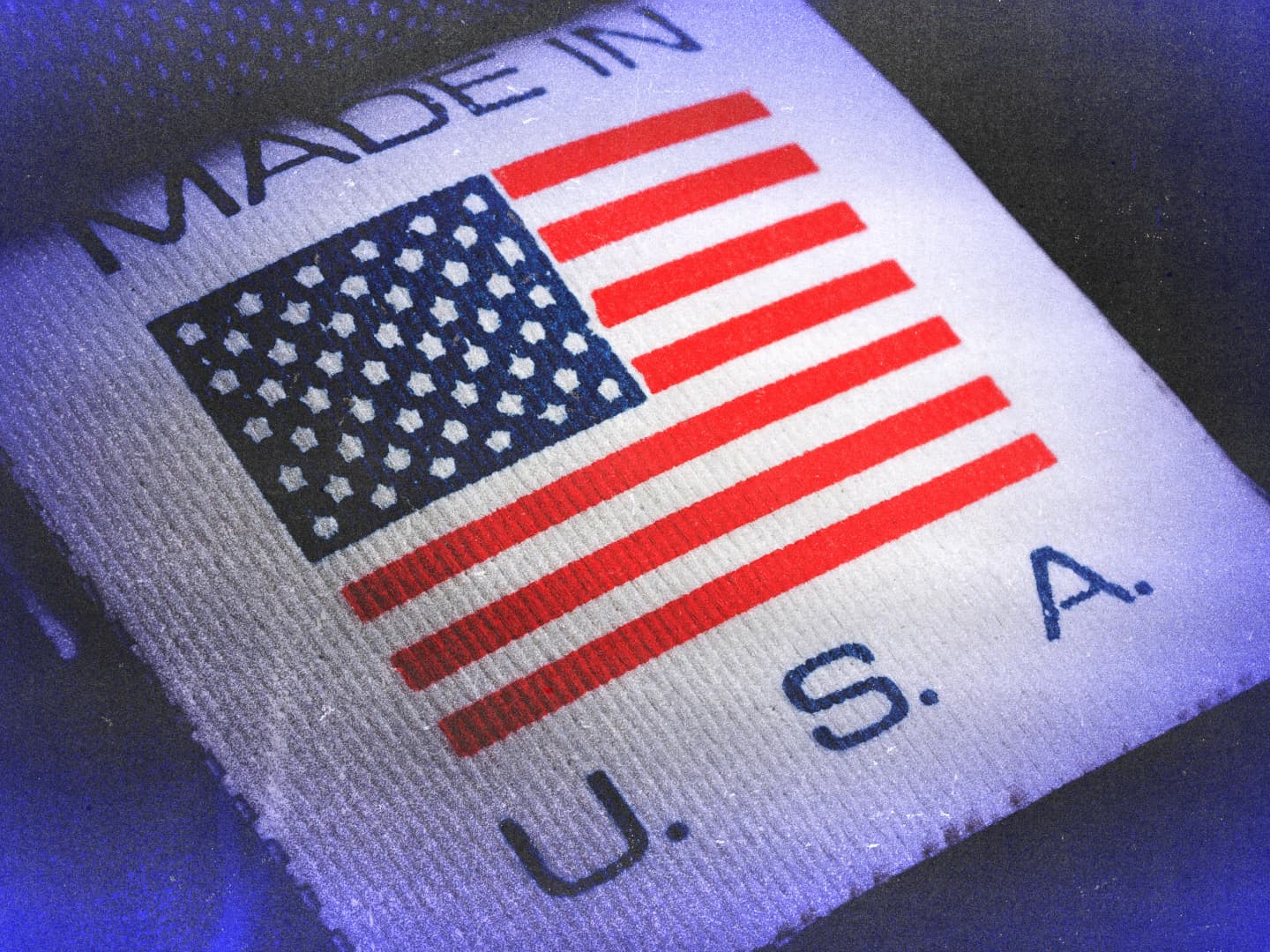
"Made in USA" on a hangtag, a product page or a catalog is a marketing claim, and in the United States it is governed by two different sets of rules. The mandatory origin and fiber labels that must appear on clothing fall under the Textile and Wool Acts — see our separate article on what US law requires on those labels. The claim itself, unqualified "Made in USA," is an FTC matter, governed by the Made in USA Labeling Rule, finalized in August 2021 at 16 C.F.R. Part 323.
This article explains what the FTC's rule and guidance say: the standard a product must meet before its maker may call it Made in USA without qualification, what a qualified claim can look like, and what exposure a marketer faces. It is a guide to the rule, not an endorsement of any brand's claims.
The "all or virtually all" standard
Traditionally, the FTC has required that a product advertised as Made in USA be "all or virtually all" made in the United States. The 2021 rule wrote that standard into regulation: "The Labeling Rule codified the 'all or virtually all' standard for labels on products."
The FTC staff guidance explains that whether a product counts as "all or virtually all" made in the U.S. comes down to two factors: how much of the product's cost a raw material makes up, and how far removed from the finished product it is. The guidance's examples show how those two factors are weighed.
- A costly, close input: "If the gold in a gold ring is imported, an unqualified Made in USA claim for the ring is deceptive."
- A far-removed, insignificant input: the FTC's example of a clock radio otherwise made in the U.S. of U.S.-made components, where "If the plastic case was made from imported petroleum, a Made in USA claim is likely to be appropriate because the petroleum is far enough removed from the finished product, and is an insignificant part of it as well."
The FTC's guidance gives no garment-specific example, but a reader can translate the two factors to clothing as an illustration, not as an FTC holding: fabric or other major components that represent a large share of a garment's cost and sit close to the finished product would be weighed more heavily under the standard than minor inputs far removed from final assembly. Whether a particular garment passes the "all or virtually all" test is a judgment the FTC's full rule text and Policy Statement govern.
What the rule applies to — and what it does not
The Labeling Rule applies to unqualified Made in USA labels on products, and to mail-order and online marketing that carries such a label or mark. "The Labeling Rule applies to labels on products that make unqualified Made in USA claims. It also applies to any online or other mail order marketing materials that include a seal, mark, tag, or stamp labeling a product Made in USA." The FTC's broader policy statement covers origin claims in advertising, promotion and other marketing, whether express or implied.
Importantly for clothing shoppers, there is no general legal requirement that most products sold in the US carry a Made in USA label at all — the rule governs claims a marketer chooses to make. "There's no law that requires most other products sold in the U.S. to be marked or labeled Made in USA or have any other disclosure about their amount of U.S. content." The rule applies to "all products advertised or sold in the U.S., except for those specifically subject to country-of-origin labeling by other laws" — which, for clothing, means the Textile and Wool Acts' mandatory labeling duties remain the baseline.
Qualified claims: what they look like and when they fit
A qualified Made in USA claim spells out its own limits. "A qualified Made in USA claim describes the extent, amount or type of a product's domestic content or processing. It indicates that the product isn't entirely of domestic origin." The FTC's examples include "60% U.S. content," "Made in USA of U.S. and imported parts," and "Couch assembled in USA from Italian Leather and Mexican Frame."
Even a qualified claim carries risk. "Because even qualified claims may imply more domestic content than was actually used to manufacture the product, exercise care when making these claims." The FTC adds that a maker should "avoid qualified claims unless the product has a significant amount of U.S. content or U.S. processing." In other words, a maker cannot bolt "of U.S. and imported parts" onto a product with negligible US content and expect the qualifier to carry the claim.
Penalties, product lines and pre-approval
The 2021 rule changed the stakes: "Marketers are now subject to civil penalties if they use an unqualified Made in USA label on a product that is not 'all or virtually all' made in the U.S., including in catalogs or online." That means the exposure is not limited to a correction order — the FTC can seek civil penalties, the amounts of which are set elsewhere in FTC practice and not stated in this guidance.
Two further points from the guidance. First, a marketer cannot smooth over a partial picture by suggesting a whole line is domestic: "Manufacturers and marketers should not indicate, either expressly or implicitly, that a whole product line is of U.S. origin ('Our products are made in USA') when only some products in the product line are made in the U.S. according to the 'all or virtually all' standard." Second, the FTC does not pre-approve claims: "A company doesn't need approval from the FTC before making a Made in USA claim and the FTC doesn't pre-approve advertising or labeling claims."
Status and limits
The FTC publishes this guidance with a caveat. "This publication is the FTC staff's view of the law's requirements. It is not binding on the Commission." The rule itself, at 16 C.F.R. Part 323, is binding regulation; the staff guidance is explanatory and is the FTC's own characterization of the law. For clothing, the rule layers on top of the Textile and Wool Acts' mandatory country-of-origin labels — a brand can be fully compliant with the mandatory labeling and still fall short of the "all or virtually all" standard for an unqualified marketing claim. These are separate regimes with separate triggers, and the FTC's own guidance notes the distinction between them.
How to check a claim yourself
To evaluate a specific garment, check both the marketing copy and the sewn-in label: if the label says Made in USA without qualification but the marketing or content list points to substantial imported fabric or components, that gap is exactly what the "all or virtually all" standard addresses. As a shopper, you can compare the two sets of statements, and if you believe a claim is deceptive, you can flag it to the FTC through its complaint system; enforcement action on any given brand is the agency's call.
The rule text, 16 C.F.R. Part 323, is published by the agency, and the FTC staff's guidance is collected at www.ftc.gov/musa, where "Links to the Made in USA Policy Statement and the Labeling Rule also can be found." Reading the rule and the staff guidance side by side lets you see both the binding standard and the FTC's own explanation of how it is applied.
From the source
Written from the pages listed above and checked by the editors. Spotted a mistake? Write to us: corrections keep the address and the first publication date.
Read next
More in LabelsLabels·What the rule saysUK··5 min
What the Rule Says (UK): The 14-Day Right to Cancel an Online Clothing or Shoe Order Under the Consumer Contracts Regulations 2013
When you buy clothes or shoes online in the UK and simply change your mind — the item is fine, but you no longer want it — your right to return is governed by a different rule from the faulty-goods rules: the Consumer Contracts (Information, Cancellation and Additional Charges) Regulations 2013. This explainer sets out what the Regulations say: when the 14-day cancellation period starts (for most orders, from delivery, with special rules for split deliveries and subscription-style regular deliveries), that you can cancel without giving a reason, how the period is extended when the trader fails to tell you about the right to cancel, and the rules' own limits. All statements are drawn from the Regulations themselves as published on legislation.gov.uk, as read for this article.
How to Return an H&M Order from the US: The 30-Day Window, the $5.99 Mail-In Fee, and What Counts for In-Store Returns
H&M's US return policy, as stated on the brand's own customer-service page: a 30-day decision window, free in-store returns with a receipt and tags, a $5.99 fee deducted from mail-in returns of online purchases, refunds to the original payment method, and a gift-card caveat that matters. Here is how the policy works, what it excludes, and how to check the terms before you send anything back.
Labels·What the rule saysUS··3 min
What the Rule Says (US): The Fur Products Labeling Act and FTC Fur Rules — What Must Appear on a Fur Garment Label
In the United States, fur garments sold to consumers fall under the Fur Products Labeling Act and the FTC's Fur Rules (16 CFR Part 301). According to the FTC, the rules require fur products to be labeled with information such as the animal's name, the manufacturer's name, and the garment's country of origin. This explainer sets out the legal basis, the rule's core labeling requirement, and the FTC's rulemaking history, based on the FTC's Fur Rules page.