Labels, Claims & Rights·Explainer
What KEEN's 'PFAS-Free Since 2018' Claim Covers — As the Brand States It
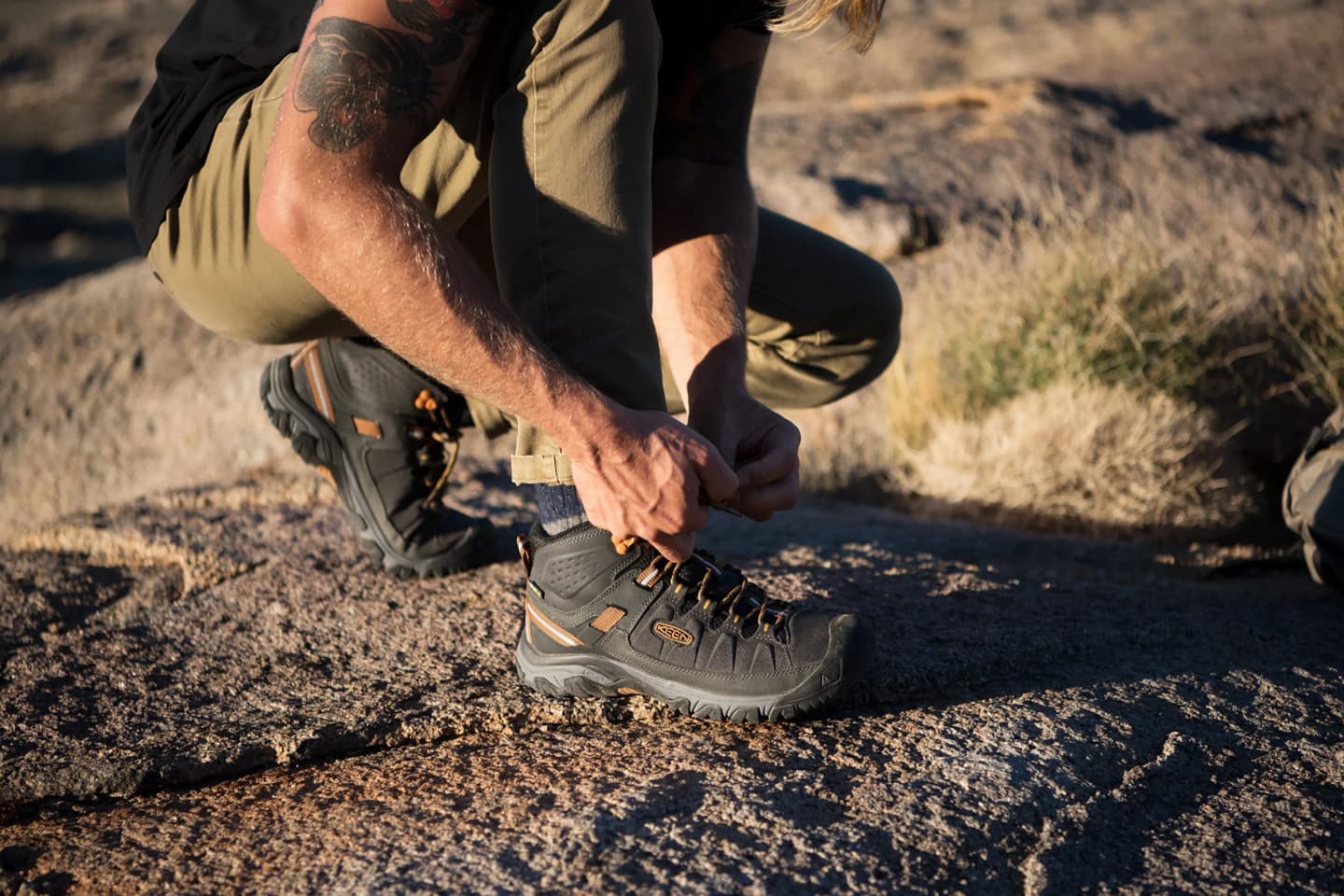
KEEN says it has been PFAS-free since 2018, after a four-year elimination effort that began in 2014. This brand program profile explains what the claim covers, the policy framework the brand points to, and what a reader should keep in mind — all as KEEN states it, not as independently verified fact.
Contents
PFAS — per- and polyfluoroalkyl substances, sometimes shortened to "forever chemicals" — have moved from an industrial chemistry question to a label question that buyers face on jackets, boots and sneakers/trainers. Among outdoor footwear brands, KEEN is one that has made a PFAS-free claim a visible part of its marketing. This profile sets out that claim only as the brand states it on its own site.
KEEN's Consciously Created page says: "We're removing harmful chemicals from our shoes and have been PFAS Free since 2018. No forever chemicals here." On the same page, the brand frames its stated goal in broader terms: "Our goal is simple: Create footwear that is free of all toxic chemicals." Everything in this article comes from KEEN's own pages; it is a statement of brand policy, not an outside test result.
What the brand says PFAS are
KEEN's dated blog post "What Is PFAS Free?", published January 24, 2024, defines the term in plain language. Per the brand: "The short, easy-to-pronounce answer: forever chemicals. The longer, hard-to-say answer: per- and polyfluoroalkyl substances." The brand describes these as "über-persistent man-made chemicals" that "stick around for a very, very, very long time."
The same post states the brand's scope claim in the broadest scope wording on these pages: "That's why every shoe, boot, and sandal we make is PFAS free. Even our packaging." KEEN presents this as a company declaration about its own products; a buyer who wants certification-level assurance for a specific shoe should look for any certification marking on that product or its label and check who awards it. The wording above reflects the brand's pages as captured in October 2026.
The timeline the brand gives
KEEN's PFAS Free Portal places the start of the work earlier than the 2018 date: "In 2014, we embarked on a 4-year journey to eliminate toxic PFCs and PFAS from our shoes." On that account, the brand describes an internal elimination project running from 2014, with 2018 as the point from which it says the products have been PFAS-free. The portal also frames the effort in broader terms, arguing that buyers and makers share responsibility because "our planet is one big shared supply chain."
The framework the brand points to
The PFAS Free Portal names the external guidance KEEN says it follows. In the brand's words: "We follow the guidance set by The Green Science Policy Institute and are committed to removing harmful chemicals from our entire range of footwear." The Green Science Policy Institute is an organization the brand cites for its chemical guidance; the commitment described is KEEN's own.
The same portal lists two internal documents that carry the policy detail: a PFAS-free policy and a restricted substances list. These are the places a reader would look for the specific substances the brand says it excludes and any thresholds it applies. KEEN also invites contact on the subject at the email address it publishes on the portal, PFASfree@keenfootwear.com.
What this claim does and does not mean
KEEN presents its PFAS-free statement as a declaration about its own products and packaging, made on the brand's own authority: on its pages, the brand states the scope as covering every shoe, boot and sandal it makes and its packaging. Because a brand declaration is not an independent certification, a buyer who needs test-level assurances for a specific product should check the product's own materials wording and look for any certification marking on the product or its label. Claims and policies like these can also change over time; the wording above reflects KEEN's site as captured in October 2026, and the brand may update its policy or portal afterward.
Checking it yourself
Because the claim rests on the brand's own documentation, verification starts with the brand's own pages:
- Read KEEN's current PFAS Free Portal and the linked PFAS-free policy and restricted substances list, and note any date or version given.
- Check the product page of any specific shoe or boot for its own materials and substances wording, since a general claim and a product-level listing are different levels of detail.
- Look for any certification marking on the product or label and check who awards it.
- Contact the brand at the address it publishes (PFASfree@keenfootwear.com) if a product-level question is not answered there.
- For background on the chemistry and on regulation in your jurisdiction, check a regulator's or certification body's own pages rather than relying on brand text alone.
From the source
Written from the pages listed above and checked by the editors. Spotted a mistake? Write to us: corrections keep the address and the first publication date.
Read next
More in LabelsLabels·Brand program··4 min
Fair Trade Certified on Patagonia Clothing: How the Brand Says Its Premium-and-Worker-Fund Program Works
A brand program profile: what Patagonia says Fair Trade Certified means on its clothing, how the brand says its premium and worker-run Community Development Fund work, and the figures it reports — all attributed, with limits.
Labels·What the rule saysUS··6 min
What the Rule Says (US): The FTC's Made in USA Labeling Rule (16 CFR Part 323) — What the "All or Virtually All" Standard Means on Clothing and Other Products
The FTC's "all or virtually all" standard for unqualified Made in USA claims, now codified at 16 CFR Part 323, what qualified claims look like, and how this voluntary marketing rule sits alongside the separate mandatory country-of-origin labels required for textile and wool products.
Labels·What the rule saysUK··5 min
What the Rule Says (UK): The 14-Day Right to Cancel an Online Clothing or Shoe Order Under the Consumer Contracts Regulations 2013
When you buy clothes or shoes online in the UK and simply change your mind — the item is fine, but you no longer want it — your right to return is governed by a different rule from the faulty-goods rules: the Consumer Contracts (Information, Cancellation and Additional Charges) Regulations 2013. This explainer sets out what the Regulations say: when the 14-day cancellation period starts (for most orders, from delivery, with special rules for split deliveries and subscription-style regular deliveries), that you can cancel without giving a reason, how the period is extended when the trader fails to tell you about the right to cancel, and the rules' own limits. All statements are drawn from the Regulations themselves as published on legislation.gov.uk, as read for this article.