What the Responsible Down Standard (RDS) Logo on Down Jackets and Bedding Actually Certifies
The RDS logo on a puffer jacket or duvet means the down inside was certified against animal welfare criteria — including a prohibition on live-plucking and force-feeding — with third-party audits and chain-of-custody tracking from the farm to the final product. Here is what the standard covers, what its page says it does not, and why it remains in use after Textile Exchange's December 2025 transition to the Materials Matter Standard.
Contents
A small logo on a down jacket (or comforter/duvet, in UK terms) or a pair of pillows promises something specific: that the down and feathers inside were produced under rules meant to protect the welfare of the ducks and geese they came from. The logo belongs to the Responsible Down Standard, or RDS, run by the nonprofit Textile Exchange. According to the organization, RDS is a voluntary standard that aims to improve the treatment of the birds and give companies and consumers a way to know more about the origin of materials in the products they buy.
If you have seen headlines about the Materials Matter Standard — Textile Exchange's new framework launched in December 2025 — you may wonder whether the RDS logo is outdated or being phased out. The short answer from Textile Exchange: no. Down is not part of the first version of Materials Matter, so the RDS remains in force and brands can keep making claims under it. This explainer walks through what the certification covers, how it works, what its limits are, and how you can check a product's status yourself.
What the standard actually requires
The RDS sets welfare criteria for ducks and geese at the source. The clearest harvesting rules in the standard concern how the down is taken: the standard bars removing down or feathers from live birds, a practice known as live plucking, and also prohibits molt harvesting and force-feeding. Textile Exchange frames animal welfare — respect for the welfare of birds from hatching to slaughter, drawing on the Five Freedoms framework — as a core part of the standard's criteria.
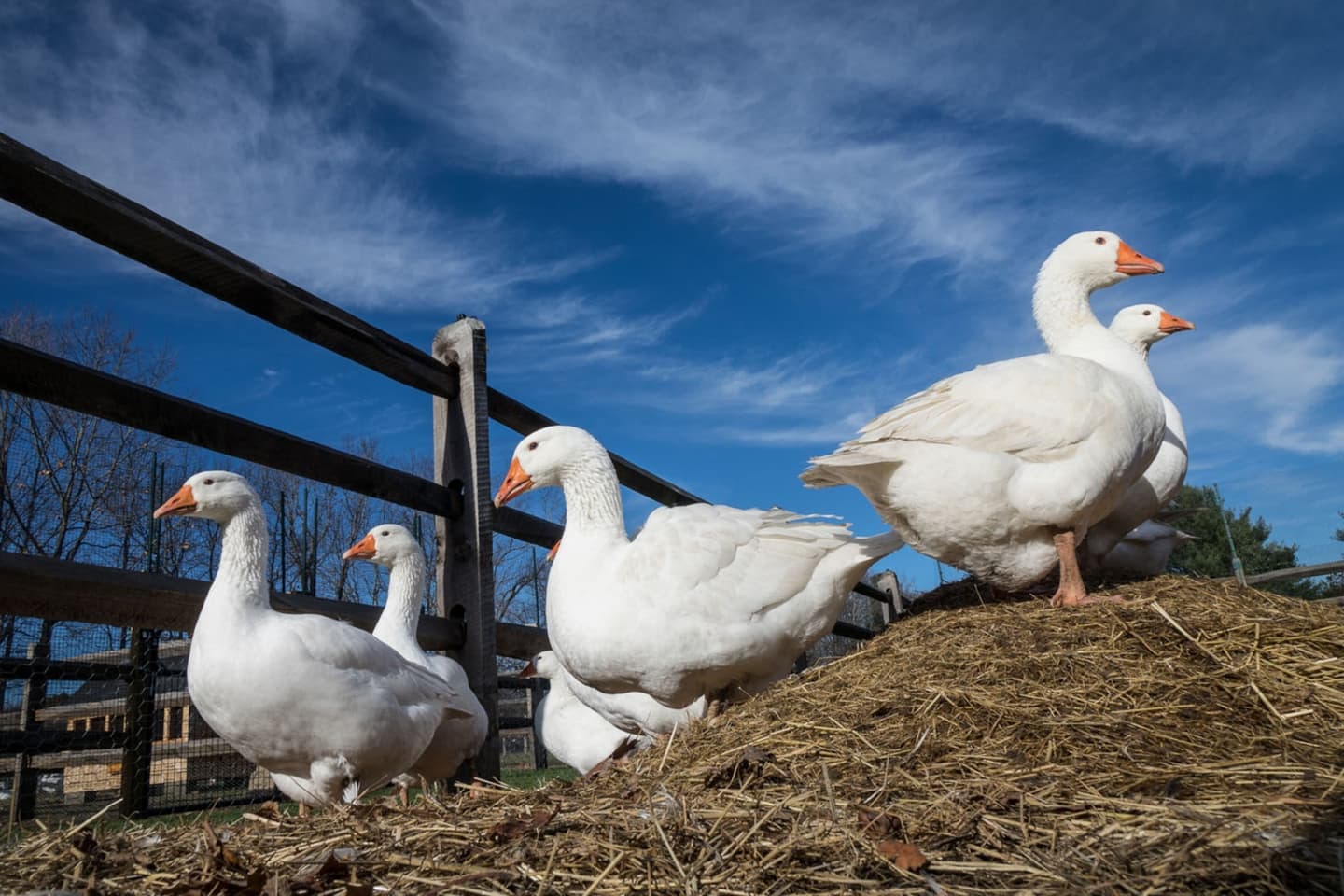
Two other elements matter for what the logo is worth. First, certification is carried out by an independent third party: a professional certification body audits each stage of the supply chain, starting at the farm. Second, a chain-of-custody system documents the path certified material takes through all stages of the supply chain to the final product, which is what links the down inside your jacket to a certified source. Products meeting the minimum requirements may then carry the RDS logo.
What the logo does not tell you
The RDS is a welfare and chain-of-custody standard, not a transparency tool. In its own FAQ, Textile Exchange states plainly that its standards are not designed to identify the farm behind a specific product. A brand that wants to know exactly which farms supplied its down has to ask its suppliers to disclose that information directly. The organization says it is working on a traceability system, but on the page read for this article the standards themselves stop short of naming the source farm for a given item.
It is also worth keeping the standard's scope in mind when reading a product page. On the page read for this article, Textile Exchange describes the RDS only in welfare and chain-of-custody terms — setting criteria for the treatment of the birds, tracking certified material through the supply chain, and strengthening companies' claims that their products contain certified material — and makes no performance or environmental claims for the standard. Textile Exchange lists RDS among its animal fiber and materials standards — a parallel example is the Responsible Wool Standard for wool — and treats down labeling as a claims question governed by its Standards Claims Policy.
The Materials Matter transition — and why RDS continues
In December 2025 Textile Exchange launched the Materials Matter Standard, which the organization describes as a voluntary sustainability standard for the production and primary processing of raw materials used in the fashion, textile, and apparel industry, and as a significant evolution of its standards system. As for the RDS itself, Textile Exchange states that the next revision will be part of its move towards a single unified standard; the current page also records that RDS 3.0 was released on July 1, 2019.
Down, however, is not in that first version. Textile Exchange explains that in pilot tests, the findings indicated producers would likely need more support and engagement to expand the scope of certification, and says it is committed to engaging producers to support the shift. In the meantime, the organization states that brands and producers can continue using the Responsible Down Standard and making claims according to the Standards Claims Policy. For shoppers, that means RDS-labeled products remain current, not legacy stock — though the details of the transition are the kind of thing that can change, so it is worth checking Textile Exchange's site for updates.
How to verify an RDS claim yourself
- Look for the RDS logo or an explicit RDS mention on the product label or listing, and note that Textile Exchange says its logos can be used worldwide as long as logo-use and claims requirements are met.
- Use Textile Exchange's "Find a Certified Company" directory to confirm whether a company is certified.
- For deeper questions, consult the official documents on the RDS page: the standard itself (RDS-101), the RDS User Manual (RDS-201), the Quick Guide (RDS-403), and the Standards Claims Policy (TE-301).
- If a claim is unclear, contact the brand and ask how its RDS labeling is certified — and remember that farm-level identity is not something the standard itself discloses.
To check any specific product, start with the label: if RDS appears, look up the brand or supplier in Textile Exchange's certified-company directory and, if you need more detail, read the current standard documents and the Standards Claims Policy on the Textile Exchange site — the page read for this article was retrieved in September 2026, and certification details and transition plans can change, so the live site is always the final word.
From the source
Written from the pages listed above and checked by the editors. Spotted a mistake? Write to us: corrections keep the address and the first publication date.
Read next
More in MaterialsWhat KEEN.DRY Is: How the Brand Describes Its Waterproof Membrane, and Waterproof vs Water-Resistant vs Water-Repellent
A source-based explainer of KEEN.DRY, drawn from the brand's own February 10, 2020 explanation: an internal membrane described as a thin bootie that keeps water out while letting vapor escape, the brand's distinction between waterproof, water-resistant and water-repellent materials, its PFAS-free repellency treatment, and its own account of third-party flex testing to a 50,000-flex internal standard. All claims are attributed to KEEN as the brand states them.
What Hemp Fabric Actually Offers: What Patagonia Says About Growing It, Blending It and Its 'Iron Forge' Canvas
An explainer based on Patagonia's own material page: why the brand says it grows hemp with little irrigation, how it blends the fiber with organic cotton, recycled polyester and TENCEL lyocell, what the 'Iron Forge Hemp' abrasion claim says, and where the brand's account stops. All claims are the brand's, not independent tests.
What Coolmax Is: The Polyester Fiber in Darn Tough's Synthetic Socks, As the Brand Describes It
Coolmax is a brand of polyester engineered as a breathable, moisture-wicking alternative to wool. This explainer sets out what Darn Tough says about the fiber — how it is made, why the brand knits select Hike and Run socks from it, and the dated EcoMade recycled-content claim — with all comparisons to Merino wool kept as the brand's own position.