What the Responsible Wool Standard (RWS) Logo on Wool Clothing Actually Certifies — and How the Materials Matter Standard Transition Changes It
RWS is a voluntary standard from Textile Exchange covering sheep welfare, land management, social criteria and chain of custody from farm to the final business-to-business seller. It does not give shoppers farm-level transparency. Textile Exchange is transitioning RWS into the Materials Matter Standard, with effective and mandatory dates in 2026 and 2027. Here is what the logo means, what it does not, and how to check a claim.
Contents
If you have turned over a sweater/jumper or the tongue of a pair of wool-lined boots and seen a mark reading RWS, you are looking at the logo of the Responsible Wool Standard, run by the nonprofit Textile Exchange. It is easy to assume the tag means the garment is fully traceable back to one farm — but that is not what the standard promises. Understanding what it does and does not certify matters both for buying decisions and for the transition now underway to a replacement standard.
What the standard actually covers
RWS is a certification system for sites in the wool supply chain. According to Textile Exchange, certified farms are evaluated against three groups of requirements, and an independent body audits each stage of the chain.
- Animal welfare: the Five Freedoms of animal welfare are incorporated into the standard's criteria.
- Land health: progressive land management methods are checked on certified farms to help protect soil health, biodiversity, and native species.
- Social welfare: the criteria cover working conditions and the health and safety of workers associated with farms.
- Auditing: a third-party certification body audits each stage in the supply chain starting at the farm.
- Chain of custody: documents verify the path certified materials take through all stages of the supply chain to the final product.
- Labeling: products that meet the minimum requirements for certification may be labeled with the Responsible Wool Standard logo.
How far the chain of custody reaches
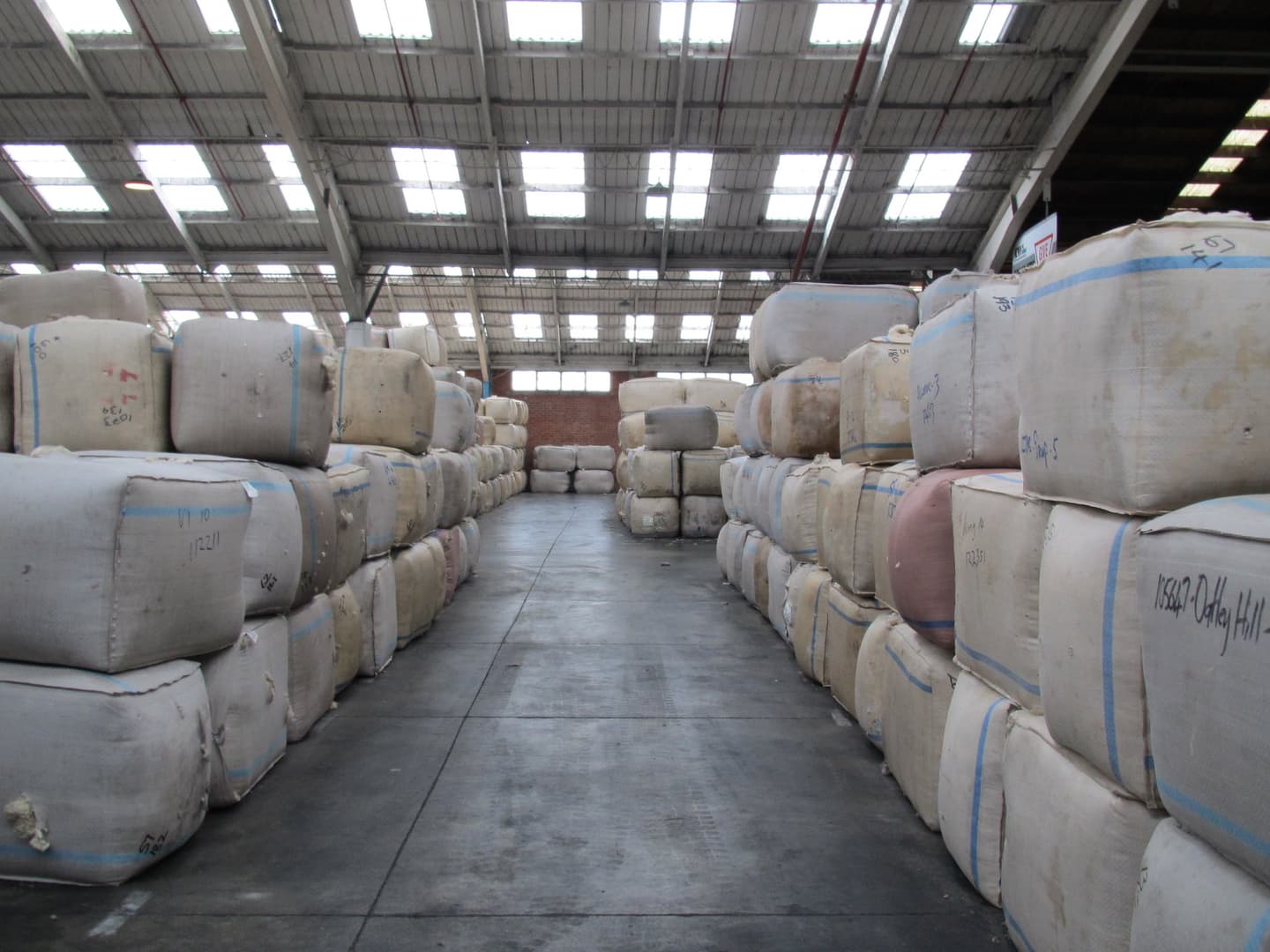
The scope of certification is defined by the standard itself: every site must be certified, from the wool farm to the seller in the final business-to-business transaction. In practice that means the chain of custody covers the supply of certified wool through commercial transactions — not necessarily a garment's full retail story. Textile Exchange describes the aim as providing a strong chain of custody for certified materials as they move along the supply chain, and strengthening companies' claims that the products they sell contain certified material.
What the logo does not tell you
The clearest limit is transparency: the logo certifies that a product contains certified wool, not which farm that wool came from. Textile Exchange states this directly in its FAQ, and points readers who want farm-level detail toward their own suppliers. The organization also notes it is developing a traceability system, which is not part of the current RWS certification itself.
A second limit is what the page does not describe. Textile Exchange's RWS page does not present RWS as an organic certification, nor does it describe coverage of the dyeing, finishing or environmental footprint of a finished garment. If you care about those aspects, treat the RWS logo as evidence of farm-level animal welfare, land and social criteria plus chain of custody — nothing broader.
The transition to the Materials Matter Standard
RWS is being folded into a new framework. Textile Exchange says it is unifying its suite of standards into the Materials Matter Standard, described as a voluntary sustainability standard for the production and primary processing of raw materials used in the fashion, textile, and apparel industry, covering areas from land, water and energy use to working conditions, animal welfare, emissions, chemicals and waste. Textile Exchange is folding RWS into this single standard; check the transition pages for what this means for existing certification and labeling.
- Criteria for the Materials Matter Standard were released on December 12, 2025, according to Textile Exchange.
- The standard becomes effective on December 31, 2026; from that date, eligible certified organizations can request audits by approved certification bodies.
- The mandatory date is December 31, 2027: eligible organizations must complete their next audit to the new standard to maintain their certification from that date onwards.
- From the mandatory date, all Tier 4 organizations will need to complete their next audit to the new standard to maintain their certification.
- Sites currently certified, or pursuing certification, to the current standards should keep an eye on updates as the timeline progresses.
If you want to verify an RWS claim on a garment, you can check whether a company is certified in Textile Exchange's public directory of certified companies, and compare any on-label claim against Textile Exchange's Claims & Labeling Guidance and Standards Claims Policy documents, which the organization publishes alongside the standard. For the transition status, the Materials Matter Standard and Standards Transition pages on the Textile Exchange site carry the current timeline, which can change as it progresses.
From the source
Written from the pages listed above and checked by the editors. Spotted a mistake? Write to us: corrections keep the address and the first publication date.
Read next
More in MaterialsWhat KEEN.DRY Is: How the Brand Describes Its Waterproof Membrane, and Waterproof vs Water-Resistant vs Water-Repellent
A source-based explainer of KEEN.DRY, drawn from the brand's own February 10, 2020 explanation: an internal membrane described as a thin bootie that keeps water out while letting vapor escape, the brand's distinction between waterproof, water-resistant and water-repellent materials, its PFAS-free repellency treatment, and its own account of third-party flex testing to a 50,000-flex internal standard. All claims are attributed to KEEN as the brand states them.
What Hemp Fabric Actually Offers: What Patagonia Says About Growing It, Blending It and Its 'Iron Forge' Canvas
An explainer based on Patagonia's own material page: why the brand says it grows hemp with little irrigation, how it blends the fiber with organic cotton, recycled polyester and TENCEL lyocell, what the 'Iron Forge Hemp' abrasion claim says, and where the brand's account stops. All claims are the brand's, not independent tests.
What Coolmax Is: The Polyester Fiber in Darn Tough's Synthetic Socks, As the Brand Describes It
Coolmax is a brand of polyester engineered as a breathable, moisture-wicking alternative to wool. This explainer sets out what Darn Tough says about the fiber — how it is made, why the brand knits select Hike and Run socks from it, and the dated EcoMade recycled-content claim — with all comparisons to Merino wool kept as the brand's own position.