Why Sock Makers Blend Merino Wool with Nylon and Spandex: What Darn Tough Says About Durability, Fit and '100% Merino' Claims
A 100% Merino wool sock sounds like the top of the range, but Darn Tough – a brand that knit Merino socks – argues otherwise. We walk through the brand's own explanation of yarn blends versus garment composition, why it adds nylon in high-wear zones and Lycra spandex for fit, and what its example fiber breakdowns (48/45/7 and 61/36/3) suggest about reading a sock's label. All durability and comfort claims here are the brand's, not independent test results.
Watch Best Merino Wool Hiking Socks? | Smartwool vs Darn Tough
The recording belongs to Ridge & River, not to this publication, and it plays from YouTube: opening it lets YouTube see the request.Watch on YouTube instead.
Contents
A label reading '100% Merino wool' looks like a quality guarantee. For sweaters (jumpers) and base layers, the question of what that label means is fairly straightforward. Socks are a different story, at least according to Darn Tough, a Vermont brand that knits its hiking and everyday socks with Merino wool plus synthetic yarns. On its blog and Merino page, the brand explains why it deliberately does not make a pure Merino sock – and why it also warns against socks with only a small percentage of Merino.
Everything in this article is what Darn Tough states about its own materials and construction. Statements about fiber fineness, durability, fit and warranty data are the brand's claims, not independent measurements by this publication. The point of the piece is not that one brand's socks are better, but that, in the brand's telling, a sock label's fiber percentages answer a narrower question than most shoppers assume.
The distinction that matters: yarn blend vs. garment composition
Darn Tough's explainer on 100% Merino socks draws a line that helps decode sock labels. A garment is 100% Merino wool only when it is knit entirely from yarns that themselves contain nothing but Merino fiber. Some wool yarns, by contrast, are blends: the Merino fibers are spun together with other fibers such as acrylic or cotton into a single yarn. Any fabric from such a yarn is not 100% Merino, even if it is the only yarn used. The brand notes these blended yarns and the garments made from them are often less expensive.
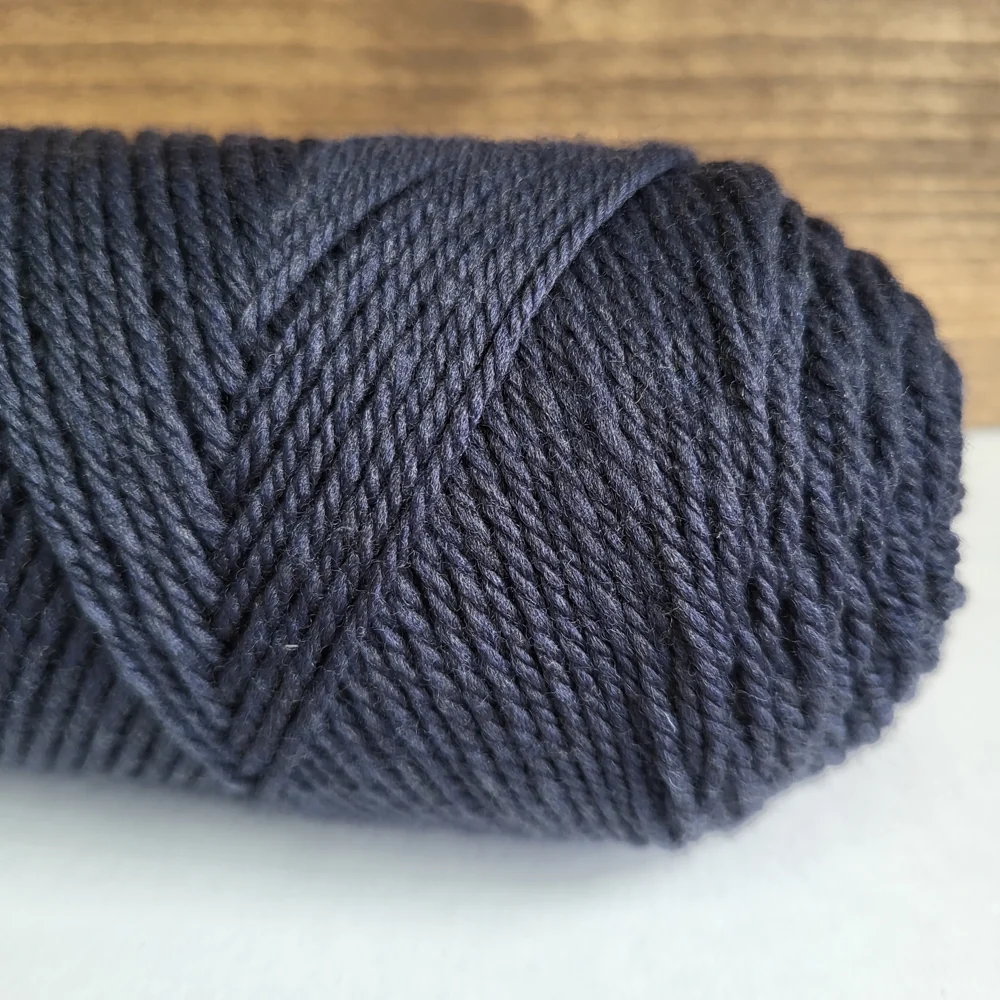
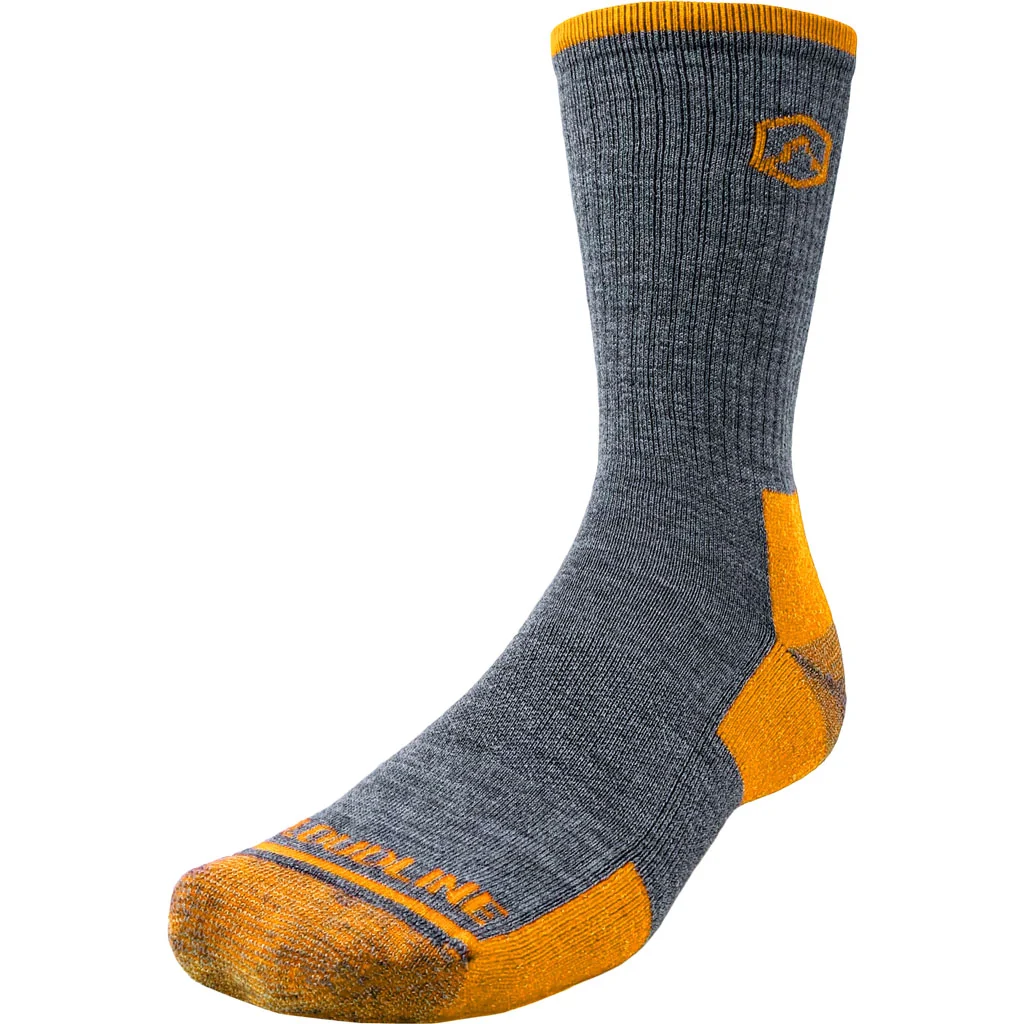
There is a third construction, and it is the one Darn Tough uses: pure Merino yarns knit together with separate yarns of other fibers. The brand is explicit about the distinction: 'We don't use wool blends. All our Merino yarns are 100% Merino Wool. We strategically knit that 100% Merino yarn with Nylon yarns and Lycra Spandex yarn to make the best wool socks.' So a Darn Tough sock is not 100% Merino as a garment, but the Merino in it is not diluted inside the yarn either.
What Merino contributes, in the brand's words
Darn Tough's Merino page describes the fiber as fine and soft, and lists the properties it knits socks for: the material is, in the brand's description, naturally odor resistant, moisture wicking, and thermoregulating. The brand attributes these qualities to the fiber's structure – small scales that aid airflow and wicking, a water-repellent cuticle, crimps that trap air and give elasticity, and an inner layer that absorbs moisture and releases vapor. These descriptions come from the brand's marketing materials, not from independent lab testing.
In its material comparisons, Darn Tough also contrasts Merino with coarser wool. The brand says Merino fibers measure roughly 24 microns down to 15 microns and below in diameter, while regular wool goes well beyond 40 microns, which it links to Merino feeling less scratchy against skin. One micron, it notes, is one millionth of a meter. These figures are the brand's own characterization of the fibers it buys, not a verified specification for every sock on the shelf.
Why the brand adds nylon and spandex anyway
If Merino has all those properties, why not knit it straight? Darn Tough's answer comes in two parts. The first is fit: on its Merino page, the brand states that a pure Merino sock would lack the elasticity to hold its fit, which is why it also knits in Lycra spandex. The second is longevity: nylon, in the brand's words, strengthens wear zones – the areas of a sock that take the most abrasion – adding high tensile strength and resilience. The brand does not name specific zones in these statements.
In the 100% Merino article, the brand goes further and points to its own warranty records as evidence: 'over 20 years of warranty data, testing, and consumer feedback have shown that strategically adding Nylon in high-wear zones makes your sock last that much longer.' That is a claim about the brand's internal data, not a published study, and it cannot be checked by a reader other than through the brand's lifetime guarantee itself.
Reading the percentages on a sock label
The most practical part of Darn Tough's argument is that the fiber percentages on a sock label reflect yarn weight as much as philosophy. The brand compares two of its own hiking socks that use, it says, essentially the same amount of nylon and spandex, but in very different numbers on the label:
- Men's Heady Stripe (Lightweight): 48% Merino Wool, 45% Nylon, 7% Spandex
- Men's 1466 Hiker: 61% Merino Wool, 36% Nylon, 3% Spandex
- The reason the numbers differ, per the brand: the Lightweight sock is knit with a finer (thinner) Merino yarn, so the Merino share of the total fiber drops while the nylon and spandex shares rise
The brand draws boundaries at both ends of the scale. A sock labeled 100% Merino misses what spandex and nylon do for fit and wear, in its view – but so does the opposite extreme. A 'Merino wool sock' with only a small Merino content, the brand says, probably will not deliver much of what Merino is chosen for. Its own example of that lower bound is 10%: 'if you're buying a "Merino Wool sock" that's only got 10% Merino Wool in it… you're probably not going to benefit from the Merino.' Darn Tough does not publish a general rule for what percentage is best; its two example socks sit in the roughly 48–61% Merino range.
What the label does and does not tell you
On the quality of the wool itself, Darn Tough points to the Responsible Wool Standard. The brand states that in 2019 it made a commitment to support the RWS and shift 100% of its wool supply to RWS-certified Merino Wool, and that it prioritizes using wool exclusively from sheep that haven't been exposed to mulesing. Certification claims on other brands' labels will vary, so the certification logo on a sock, not the fiber percentage, is where the animal-welfare claim lives.
How a reader can check a sock's claims for themselves:
- Read the full fiber-content list on the sock's packaging or product page, not just the word 'Merino' – the percentages of nylon and elastane (spandex) tell you how the sock is actually built
- Check whether the product page or care label names a certification such as the Responsible Wool Standard, and what exactly is certified
- Compare two weights of the same brand's socks and see how the Merino percentage moves with yarn thickness, as in Darn Tough's own 48/45/7 and 61/36/3 examples
- For durability claims, the main reader-side check is the brand's guarantee terms: Darn Tough states that if you buy one pair and they rip, tear, or puncture, it will replace them with a brand-new pair at no additional cost, so read what that warranty actually covers before relying on it
From the source
Written from the pages listed above and checked by the editors. Spotted a mistake? Write to us: corrections keep the address and the first publication date.
Read next
More in MaterialsWhat KEEN.DRY Is: How the Brand Describes Its Waterproof Membrane, and Waterproof vs Water-Resistant vs Water-Repellent
A source-based explainer of KEEN.DRY, drawn from the brand's own February 10, 2020 explanation: an internal membrane described as a thin bootie that keeps water out while letting vapor escape, the brand's distinction between waterproof, water-resistant and water-repellent materials, its PFAS-free repellency treatment, and its own account of third-party flex testing to a 50,000-flex internal standard. All claims are attributed to KEEN as the brand states them.
What Hemp Fabric Actually Offers: What Patagonia Says About Growing It, Blending It and Its 'Iron Forge' Canvas
An explainer based on Patagonia's own material page: why the brand says it grows hemp with little irrigation, how it blends the fiber with organic cotton, recycled polyester and TENCEL lyocell, what the 'Iron Forge Hemp' abrasion claim says, and where the brand's account stops. All claims are the brand's, not independent tests.
What Coolmax Is: The Polyester Fiber in Darn Tough's Synthetic Socks, As the Brand Describes It
Coolmax is a brand of polyester engineered as a breathable, moisture-wicking alternative to wool. This explainer sets out what Darn Tough says about the fiber — how it is made, why the brand knits select Hike and Run socks from it, and the dated EcoMade recycled-content claim — with all comparisons to Merino wool kept as the brand's own position.